Preparing video...
0:00 / 0:00
Vayigash - Finding Moshiach Peace Now
214 views
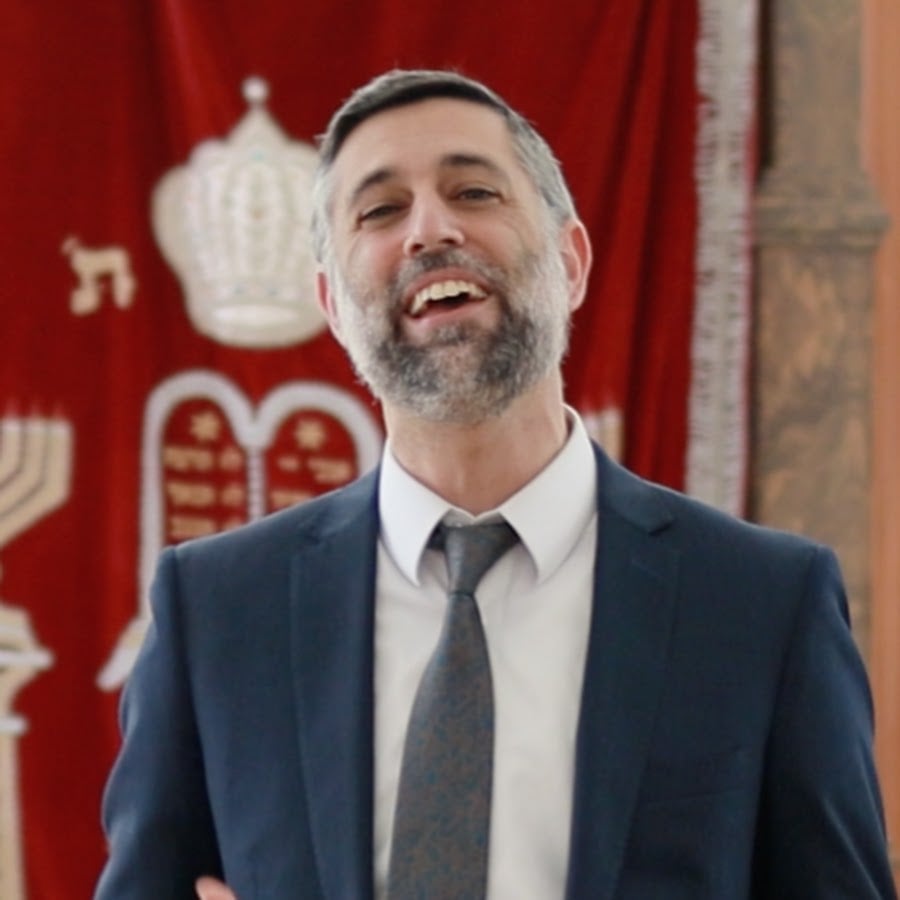
Why was Yehuda specifically sent to go down ahead of his family to Yosef in order to set up their homes and a place to study? Who are represented by the wolf and the lamb, and the lion and the cattle who graze together in peace in the future? How does the resolution of the story of Yosef and his brothers parallel the resolution of the story of the world in the coming of Moshiach? Why is it that when Hashem will bring the dead back to life, they will first be with their previous flaws, and only then brought into a state of perfection? How can each of us find this Moshiach type of peace in our personal lives? Find out in this week's Parsha Podcast.
Comments
Transcript
Auto-generated transcript. Not time-synced to the video.
You're listening to the weekly partial
podcast with Ari Goldwag recorded with
Hashem's never running assistance in
Ramad Israel 5786
2025.
This week's part is part
we have the culmination of the story of
Yseph and his brothers.
22 years in the making.
Yoseph accuses Binyammen of having
stolen his secret goblet, his powerful
magical goblet.
And
Yehuda steps up. Yehuda steps up. I love
Yehuda. Yehuda steps up in protection of
Binyaman and says, "Take me instead. I
guaranteed my father that Binyammen
would return." And and as we know,
Yoseph reveals himself to his brothers
and
they return. They inform Yakov. Yoseph
is in Mitraim. The Jewish people are now
going to make their descent into Gulus
into exile. They're going to leave
Israel. The first the first time the
Jewish people leave Israel. The first
time there is a Jewish people.
And they go down to Egypt. But before
they go down to Egypt, Pik says this. of
Yehuda was sent forward Elf to Joseph
and
the the Medish says the measures points
out that there were two different things
two possibilities as to what he was sent
down to do. Yud was sent down to find a
place for them to live to establish the
dra the place where they would live.
Alternatively, he was sent ahead to
establish establish a base medish.
Jewish people need two things when they
come somewhere. We need a place to live.
Obviously, we need a parasa livelihood.
And we need a place to study. We need a
place where we will maintain our
connection. We need a base mush. We need
a place of
and Yehuda was sent forward. And as the
Mapor explained in this medush,
he was sent forward because there was
there was no fear. Yakovina was not
afraid of sending Yehuda who had been
the one who had said let's sell Yoseph.
He was not afraid to send Yehuda to meet
up with Yoseph and discuss and figure
out the future of Kali Israel. Had they
would be maintained, where they would
live, how they would have a base medish,
how they would have a livelihood. There
was no fear. the the Jewish people had
come back together.
The brothers had through Yoseph's
incredible
forgiveness through his ability to
forgive and let bygones be bygones and
his recognition of the fact that Hashem
was in charge of his life and had led
him through all of that to become the
person that he was.
They had come back together. Now, I want
to read you a medish. The medish is
talking about the future. It's talking
about Messiah. And it's also going to
talk about the story of Yoseph. And
there's a parallel between what happens
in the future time when Messiah arrives
when the me messianic age
commences. So there's there's peace.
There's peace. And the description of
the Nvi
is about animals
grazing together and about animals that
used to be carnivorous becoming
herbivores.
I'll read to you the P. It says it's a P
in Isaiah chapter 65 verse 25. The P
says
the wolf and the sheep they will graze
together. The wolf used to be the animal
that if it would see a sheep it would
rip the sheep apart and eat it up for
dinner. Right? But the the wolf will no
longer need to have another animal that
it takes for its sustenance.
It will become herbivore. It will become
an herbivore. The wolf and the sheep
will graze together.
And the lion like the cattle will eat
straw.
So I'm I'm just going to give you a
preview for the second part of the
majish which we'll read a second. We're
going to read the majish in order.
Second part of the majish points out
that the zv is binyam. Byam is referred
to as a wolf. a wolf.
The tal the sheep is a reference to the
to the tribes
is referred to theim the tribes are
referred to as a sizura
a sheep that was spread out
the lion that's now eating straw is a
reference to Yehuda Yehuda gur
and bulkar which means cattle is a
reference to Yoseph Yoseph is a shore.
So you have all these different factors
coming together.
You have all of the aspects, all of the
children of Yakov, the leadership
aspects of Yosephuda,
the tribes, Binyammen,
Binyam has his own aspect which we're
not not really going to get into today,
but they all come together in a state of
completion as the story of of Yoseph and
his brothers completes.
But that parallels something that's
going to happen in the future. There's
going to be a wolf and a sheep.
Literally, I believe it's literal. The
wolf and the sheep will no longer,
no creature will attack another
creature. No human being will believe
that in order for me to to lift myself
up, I need to knock you down. There will
be a new way of being. There will be a
new
spirit within reality that everyone can
be who they are and and they don't have
to take away from anybody else to be who
they are. And that will be manifest in
the very nature of animals. Everything
will change.
So we're it's it's kind of beautiful
because not kind of beautiful, it's
beautiful. There's a parallel between
the coming together of the brothers
and what's going to happen in the future
in the messianic age. there's going to
be a coming together of all of creation.
A balance, a new balance is going to be
formed.
Okay, so that's the hint to the second
part of the maj which we'll read
together as well in detail. But the
first part of the maj talks about Msiah
and I think it's just
as we get to a story like this, we have
to also think about our own personal
places that we've come to when we've
been through whatever drama, whatever
challenges in our life and then we we
get to a space of rest. We get to a
space of completion on the journey. We
hit these takot these stations on the
journey where we where we look back and
we see oh that was a certain
ride that I had to go through a certain
challenge I had to live through and now
I look back and I see that I reached a
new level a new plateau because of it.
So it's important to see that in their
story. It's important to know that
that's what Msiah is. And we're going to
talk about mashia, what it looks like,
and think about how it relates to us in
our own personal journeys.
Me says something very interesting
that when Msiah comes, when the Messiah
arrives and I would say when we hit our
own personal salvation, sometimes we
have those times. So there's something
that we see in the messianic age which
is interesting and we can think about
and that is that anything that Hashem
gave a blemish to gave a wound to
something that's broken in the world
when Mashiach comes that thing is fixed.
It's healed
the gives us a few examples.
Those who are blind
they will be healed. they'll be able to
see
lost the place
says also in Shia chapter 35:5 it says
then the eyes of the blind will be
opened
those who are lame they will be cured as
well
a person who is missing a leg the leg
will grow back a person who is lame. He
has legs but they don't work. Puzz says
also in chapter 35 of Isaiah the next
puzz the the person who's lame will skip
and run like a like a ram or like a deer
in the tongue that couldn't speak the
mute will sing glad song.
So there's going to be a a
transformation of reality. All the
things that are broken, all the sickness
will be gone. Everyone will be healed.
All of the things that are broken will
be fixed.
Interestingly, the says that the way
that a person went out of the world,
let's say a person died, so there's
going to be
the in the state of rectification when
all the things are fixed. So, one of the
things that's broken is that we die.
Human beings pass on from this world
because we're meant to be here forever.
We're meant to live forever. Perhaps it
means spiritually. I don't know exactly
what it means. There is some kind of
physical existence. It might be a
spiritual version of our physical
existence. But when we come back to
life,
when the dead are revived, says the
majish,
they're going to be revived the way that
they were when they died.
Let's say when a person died, he was
blind. When he's brought back to life,
he will also be blind. Let's say when he
died, he was deaf. When he gets brought
back to life, he'll still be deaf.
When he when he died, he was mute. He's
going to come back to life mute.
If when a person died, he was buried
with clothes, he's going to come back
with clothes. Interesting description. I
think it's apt this description because
our clothes, the fact that we wear
clothes at all. What's the reason why?
It's because of a great it's because
we're embarrassed of our physical body
because we don't use it correctly.
Right?
He was embarrassed because he had sinned
so he covered himself. Right? So our
clothes represent the that which is
broken about us. If we were completely
spiritual, if we were light beings, we
wouldn't need to cover up the part of
ourselves that represents the physical
because the physical would also be full
of light. Which is what it says about
they were they were full of light. Their
ore, which usually means with an in or
means skin was or with an olive, it was
light.
So when we come back to life or when the
dead come back to life, so they'll be
clothed. They'll still be in an
imperfect state.
We learn this from
that when came up
he had passed away and then King Saul,
excuse me,
King Saul brought him back from the
dead. And the woman, the necromancer who
was able to bring him back up from the
dead saw what he looked like.
Really? Sh says, cuz he doesn't see him,
he just hears him. SH says, "What does
he look like?" Cuz she saw a vision of
of coming up from from the
He's an old man. He's wearing a wearing
a coat.
He wore a coat. That was his attire.
That was his attire. It was a miel. He
wore it for money. He was a child and he
wore it when he when he passed away. It
was something that he had worn.
So when the dead come back, when you see
them, they appear with the clothing.
Why is that so? Why, you know, Hashem is
going to fix everything, right? Hashem
is going to bring us into a perfected
state. Person comes back to life. He's
blind. And then Hashem is going to be
him. He's going to cure the blindness.
He's going to be able to see. So why
does he need to even come back in that
state?
As long as he was alive, Hashem didn't
cure him. But then when he died, Hashem
cured him. We don't want you to think
that
because it will look like
it will look like it's not the same
person.
We want the same person to come back to
life just as they originally were with
all of that which was wrong with them.
And then Hashem will after they're
alive, it's the same person, but now
they're cured. They're cured. And I
think I'm trying to understand this and
think about this. What it seems to me to
be saying is that there's a certain
experience.
There's a certain experience that I had
when I was going through that challenge.
So even though I got through the
challenge, even though I've been cured
of that challenge, I don't want to throw
that away. I don't want to throw away
that mis that experience
and I don't want to throw away the
mistake. I made a mistake. I did an ava.
I regret it. I wish I didn't do it. But
the experience that I had making that
mistake has made me a better person. I
saw what happens when you make that
mistake. I see where it brings me, the
destruction that it causes, the effect
that it has on those around me. I need
to have that experience. I can't I can't
come back to life without the mistakes,
without the problems, without the
brokenness.
The brokenness is going to be removed,
but I need to not forget about it. I
need to It's part of me. That experience
is still there.
So, Hashem says, "This is why I am going
to bring them back to to life the way
they were when I originally when they
passed away, which was with their with
their defect, and I'm going to bring
them to life in that way, and then I'm
going to fix the defect."
Right?
This is what it means. I'm going to read
to you from
sorry either
I'm sorry I'm reading this poorly
they should recognize my power.
There is no other power besides for me.
There's no other power besides for
Hashem. And I have the power to take
away life and give life. I have the
power to make things imperfect and to
perfect them. I think this is a really
powerful thing to to consider.
We we want to perfect ourselves. We want
to be greater.
This is talking about something that's
going to happen in the future. It's
talking about Msiah. But it's something
that happens every day for us. Every
single day we make a mistake. We dab. We
don't do as well as we'd like to. We
learn, we don't learn as well as we'd
like to. We interact with our families.
We don't perhaps interact as well as
we'd like to. And and I wonder like how
can I change or how can I be better?
This message is telling me
don't think that you can do it. At least
not without Hashem's help.
I judge people.
I admit it. I judge people.
We all do. But I ask Hashem, help me not
judge. Hashem, help me not judge. I I
can't get out of it. Hashem, help me
love. Hashem, help me be unconditionally
loving.
Right? It's Hashem who can help me. Just
like it's going to be in the future when
Mashiah arrives and there's going to be
these miraculous
changes. But Hashem wants us to know
that it's only him. He's the only one
who can do it. Rau
says this is not just going to be true
of the of the human beings that were
going to be cured. All the animals will
also be cured as the says our which we
quoted earlier the wolf and the sheep
they will graze together.
Okay, that's that's the basic maj.
And I think that it's important to
understand again and I'm repeating
myself a lot, but it's really important
that
the story of of Yseph and his brothers,
as we're going to see one more time in
the continuation of the measure, the
story of Yseph and his brothers is a
story of of a family split of a of a
painful
break in a family. Man has two wives.
The two wives have trouble. The children
have trouble and they come back together
in the end. There's a there's a healing
and even the healing is not perfect.
It's not mashiach
but it represents that that journey that
journey through challenge and through
resolution
and it's mankind's story and it's the
world's story. It's something that
applies to animals as well. The animals
are affected by us. The animals measure
says that Marishan when he ate from the
the tree of knowledge of good and evil
which brought which brought all the
separation into the world that judgment
that that judgment of good and evil
that split he he took from that tree and
he gave each of the animals a piece of
that fruit. So they were also an it
means that literally or just the fact
that he ate it had that impact on the
entire world. But when we are rectified
when Hashem brings the world to its
state of rectification everything is
rectified everything around us
there's a huge ripple effect on
everything.
Now I'd like to read to you the rest of
the which is talking about our story.
Who is the wolf? Like we said, it's
Benjamin
says
that he is
who is the sheep? The sheep is
the tribes, the other 10 sons of Jacob.
Pik says that the the sheep of Israel,
the the Israelites who are like sheep
who have been spread out amongst the
nation, they will come back. They will
be rejoined. They will come back to all
graze as one.
So we have we have a coming together of
the wolf and the lamb. The wolf is and
the lamb is a reference to the the 10
brothers and there's a coming together
of them as well. We don't know really
what the doesn't describe what the
relationship was between and his
brothers until then. But clearly they
didn't go down with with the brothers.
Maybe Yako was overprotective of him.
Maybe Yaku didn't trust the brothers to
deal with Binyammen.
The relationship it would seem was not
it wasn't the type of brotherly love
that hey let's all go down to Egypt
together and get food bin come along
with us. That's not what it was. But
when when Binyam is sent down ultimately
because Yoseph demands that he come what
happens
they are together the the wolf which is
and the which is the which is the tribes
they go together
said I don't want my son
I don't want who is my my son the one
who is all All that's left that I have
from I don't want him to go down with
you.
There was no choice. He did go down.
What happened?
There was a in their descent to Egypt
before they even got back together with
Yoseph. There was a a sense of
camaraderie, a sense of protection that
they were protecting. They were
surrounding Binyammen. Voram say that as
they traveled they formed a circle
around him so that if maruders would
come if enemies would come he would be
protected in the center
was in the center to the point says
it says that Yseph he was like craning
his neck he lifted up his eyes to see
Benjamin he he he had to he had to look
between the brothers to see binyam in
the middle they were surrounded founding
him. They were protecting him
in my song about Yoseph. So I have a
line there. They stood as a wall around
their father's last son. They'd
accomplished the goal. Now they'd all
join as one.
So they stood like a wall. They were
surrounding him, surrounding Minyam, the
last son, the youngest son of of Yakov.
So they came together. There was a
coming together already of the children
of Yose of the children of Rael in Yam
and the brothers
arud
refers to the lion and the cattle which
are eating straw.
So the area who's a lion gurud it's a
reference to Yehuda is called a lion
cubak
like the cattle it's a reference to
he's referred to as the firstborn ox. He
was an ox. Now, sure,
whatever the analogy is, whatever it
represents, but he's like cattle
tells us at the end of last week's para,
they were eating together.
They were eating together,
right? He doesn't mention this in the
maj but when Yoseph
when Yoseph was thrown in the pit the
Pik tells us that they sat the brothers
sat down to eat they ate separately
at this point in the story even before
they joined together but they ate
together
and when people eat together even if
they don't they might not even realize
that they're connected but when they eat
together eating is the the what the PK
refers to as the wolf and the lamb
grazing together. They're eating
together. That means that they are
embibing their sustenance.
They're they're existing
in a parallel way to together. There's
no competition in it. They're eating
together.
There's no separation between them.
The brothers aren't looking at Yoseph
and saying he shouldn't be who he thinks
he is. Y is not looking at the brothers
and saying they're they need to be
something other than they are. We're on
equal footing. We're on equal footing.
You give them gifts.
That's what the means when it says that
the the lion and the cattle, they'll
both eat straw. It's a reference to
Yehuda and Yoseph that and we think
about Yseph and Yehuda as being the
leaders of Kal Israel. There's a
Mashiach bin Yoseph. There's a messianic
figure who comes from the seed of Joseph
and Yseph. He's a warrior. He's the
first phase of getting into the
messianic age. And then there's the
second phase which is Mashiah David.
He's the one who brings peace, who
brings the soul in. doesn't just allow
us to have Israel, but he brings the B
mikdash. He builds the Bikdash, the
temple where the is going to reside,
where we're going to go to get that
peace that we seek, that connection.
This is why the finishes off and says
since Yoseph and Yehuda had come into a
state of completion, Rashi says,
Since they were complete, they were
peaceful with each other.
That's why that's why he sent him. And
on one hand, it's talking about the
actual story of Yseph and his brothers
that they came to completion like we
said, but it's also talking about the
future time of Msiah when Mashia and
Yseph and Mashia have bin Benavid,
they're equal. They're different
leaders, different jobs, but they're
going to come together and they're going
to each do their job and they're going
to support each other. There's not going
to be a competition. It's going to be
each one doing their thing. Maybe like
Yoseph, the Mashiah Yoseph will be
someone who's in charge of the economy
of the Jewish people. He's in charge of
the food of the Jewish people, in charge
of taking care of the physical aspects.
And the the mashed bund will be like
Yehuda involved with the setting up of
the yeshivas bringing the Jewish people
to a greater level of of service of
Hashem a deeper understanding of what it
means to have a relationship with Hashem
but there'll be a peace there'll be a
wholeness
and I think that each and every one of
us inside of ourselves as we go through
the challenges so there's like there's a
lack of wholeness inside of ourselves
there's a break within in ourselves
between the physical part of ourselves
which says, "Hey, I need this. Hey, I
need that and the spiritual part of
ourselves which says, "Hey, I need
something deeper. I need something
greater."
And that split results in all of the
challenges, all the problems that we
have.
Our gets us and that's our physical side
pulling us in a certain way. And our
says this way and it fights and it says,
"Hey, that's that's not right." And it
guilts us.
But as we come through to the other side
and we have a clarity, we have a
clarity. So the result is a peace.
That's what it's supposed to be. We're
supposed to get to a place of peace
where we recognize that all along all of
our experiences are valuable. All of our
experiences, even the mistakes are
something that
they don't disappear. They don't
disappear. They're there for us to have
learned from and maybe share with
somebody else who's going through a
similar challenge.
But we get to a place of peace
ultimately. We get to a place where
we've come out of that challenge
and we reach that place and we have the
Yehuda of ourselves and the Yoseph of
ourselves. There's a
and now we can move on and now we can
get to the next challenge. get to the
next
plateau that we're supposed to reach.
Hashem should bless us. I ask you to
bless me. Hashem should bless us. I'm
going to bless you as well. That we
should have that clarity. We should be
able to learn from the story of Yoseph.
Learn from the future the way it's going
to be. That the one that fixes us, the
one that brings us to this peace, it's
Hashem. Like we saw with the people who
come back and they're still broken, but
they're fixed. It's Hashem who fixes us.
It's Hashem who puts us through the
challenge. And it's Hashem who helps us
if we reach out to him to be able to get
to a higher level. And ultimately should
help us to have peace, to have
with those around us, with our spouses,
with our family, with our kids, with our
parents, with our friends.
And Hashem should help us to have that
peace within ourselves. Thank you so
much for listening. Have a wonderful
Shabamas.
This podcast was made [music] possible
through the gracious donations of
listeners like you. For more podcasts
like this, please visit
www.rigoldwag.com
[music]
or search on iTunes Ari Goldwag.