Preparing video...
0:00 / 0:00
Did Matthew Change the Hebrew Bible to Make Jesus the Messiah?
12,734 views
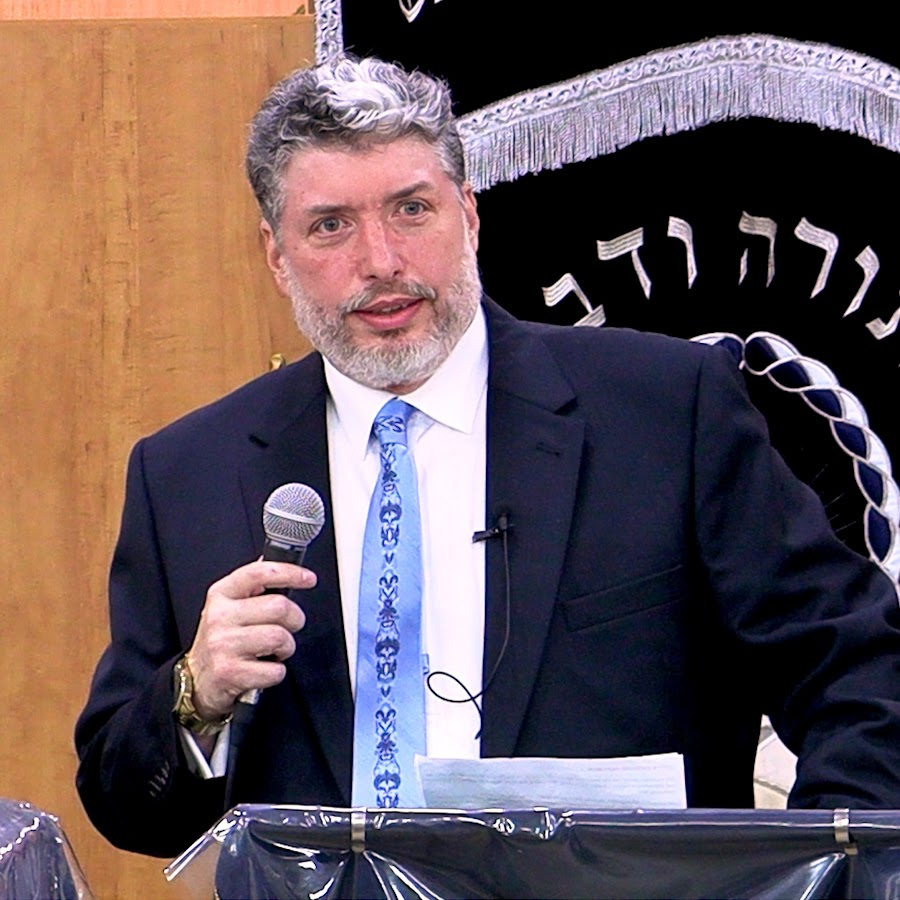
Help us combat aggressive Jewish evangelism in Israel: https://outreachjudaism.org/partners/ Let’s Get Biblical Study Guide (Volume 1 & 2) https://outreachjudaism.org/shop/lets-get-biblical-expanded-2-volume-study-guide/ https://outreachjudaism.org/ www.videvo.net https://www.youtube.com/user/tenaktalk Music: https://www.purple-planet.com Use in accordance with Israel's Copyright Law 5768-2007 section 27a. Music at the end: Adon Olam https://youtu.be/a6oS9N0hJTY http://www.toviasinger.tv/ #toviasinger #Judaism #Christianity #Messiah #joerogan
Comments
Transcript
Auto-generated transcript. Not time-synced to the video.
So he literally collapses the center.
This is
mind-blowing.
Mind-blowing.
You should right now send an email to
your church saying I resign and stop all
credit card donations to your church
because this This is not the word of
God. This I'm afraid is theological
chicanery. And if you play with my
Bible, I'm going to be a Christian.
>> Okay, so just a little preparation here.
This next caller is his name is
Christian
from Indiana and he and he's right Yeah,
right. He is very very recently in or
out of Christianity. He's got a lot of
questions and he doesn't really know how
to put them together. So I told him the
best thing to do is have me introduce
him
have him introduce himself to you and
let you guys have a little conversation
and then you can kind of guide him into
what question that's going to be fitting
for him today, okay?
Okay, Christian you are live on the air.
Brother go ahead and and tell your
question to Rabbi. Well, well, just
introduce yourself to Rabbi.
>> Okay, Rabbi, thank you so much. Um, so
again my name is Christian. Um,
I just recently saw in your debate with
Pastor Michael Williams
about is Jesus the Messiah
or not and I just watched um, you guys
go back and forth sharing scriptures
and um, sharing you guys expertise on
that. And so um, that kind of just led
me down a little bit of a rabbit hole
um, trying to figure out um, if he is
actually the Messiah
um, or
should we be looking for someone else?
Um, and then I just so happened to
stumble across your live stream asking
about um, questions about um, New
Testament about the New Testament. So I
thought, "Oh my gosh,
perfect opportunity to call in." So um,
I appreciate um, your time for speaking
with me and
thank
to ask
questions and pick your brain a little
bit.
Um
So, if you don't mind, I'd like to start
in Matthew.
Um because I remember on your live on
your debate with the pastor,
one of the scriptures that was brought
up was about the the virgin birth.
Um and the scripture in Isaiah that
talked about the the virgin will
conceive and um
give birth to a child.
And then you you mentioned
that there were two kings
um that was also part of that prophecy
which stated that
before the boy
um know is old enough to choose the
I mean the to choose the right and
reject the wrong, the two kings um will
be destroyed or something something to
that nature.
So, I kind of wanted to go a little bit
further into that because
um the reason why is because
I wanted to talk about
Joseph
and how
um Joseph
the scripture says that Joseph was
pledged to be married
um to Mary and
I'm assuming that
he had not had sexual relations with her
because he was planning to marry her.
And then all of a sudden
he finds out that he's actually
pregnant.
And
Joseph honestly believed
I mean it's written that he certainly
believed it himself that an angel the
angel Gabriel appeared to him
in a dream and told him that the child
that he is having is
of the Holy Spirit and that he shouldn't
be afraid to marry her
because um of the miraculous sign that
God was performing through her.
And so, I wanted to get your
interpretation
on that.
Um what you think about that scripture?
Do you believe that the angel Gabriel
appeared to Joseph?
Um what do you what is your take on
that?
>> No.
It's all mythology.
And for that reason, you will not find
that story
Actually, you won't find that story in
any other uh New Testament book.
Uh you'll find something different, but
has some similarities in Luke.
But Paul doesn't mention it, but
remember that the book of Matthew,
Joseph is not writing it. Whoever We
don't know who wrote the book of
Matthew.
But um just like you would reject the
claims of
Mormon Church, even though the Book of
Mormon is quite clear that Joseph Smith
had an encounter with the angel Moroni
fairly recently in April and September
21st, 1823, but I don't think you'd be
persuaded by that.
So, the Matthew does have a plot device
in which we are told that Joseph
discovers that the woman that he was
engaged to is really that he was
whatever engaged to was pregnant, but
that's just the story. I don't believe
it anymore
than I believe the Bhagavad Gita or that
I believe the Pali Canon or other books
or I just No, it's not And the reason I
don't believe in it because it's not
compatible
with the Hebrew Bible. I want to be
clear about that. Meaning going back to
Isaiah, which you correctly pointed to
it's not speaking about a virgin, but
the text says in Isaiah 17, "Behold, the
young woman is with a child, and she
will bear a son, and she will call his
name Immanuel.
So, therefore, what Matthew conveys in
chapter 1 verse 23 is not compatible
with that cuz Matthew says, "Behold, a
virgin
um shall conceive and bear a son, and
they shall call his name Immanuel." So,
that's completely incorrect. And
moreover, and you pointed this out
correctly, that Matthew is taking Isaiah
out of context. You're right. Isaiah is
referring to the Afro-Syrian war, in
which Jerusalem is surrounded by Pekah
ben Remaliah and Rezin, the king of
Israel and Syria, respectively. And the
sign is not even the conception or birth
of the child, and you pointed that out
perfectly. The sign is that be the
maturity of the child that before the
child matures, these two kings that you
abhor will be destroyed. So, this
clearly not talking about uh Jesus cuz
what two kings? The context of Isaiah 7
is it's the Afro-Syrian war. And
moreover, what do you mean when the
child knows the difference between good
and evil to reject bad? This is not
referring to Jesus. Therefore, the
reason we can be confident that Matthew
1 and 2, as in the rest of the book, the
other 26 chapters, should be rejected is
cuz Matthew is misappropriating,
misquoting, mistranslating
passages in the Hebrew Bible. So, that's
like a very low bar to reject it. That's
why I don't believe it.
>> Okay. Um so, I want to answer your
question about the two kings.
Um so, in Matthew chapter 2,
uh during the birth the birth of Jesus
Christ, if you know, I mean, if you
remember, uh it was written that the
wise men came from the east because they
say that, you know, they saw a star.
When the when the chief priest and the
religious leaders point pointed to the
fact
>> ruler would come from Bethlehem, and
that they knew that he that he had
already been born because
the the the wise men from the East came
in asking, "Where is this king of the
Jews?" And they immediately pointed to
Bethlehem.
So, could you walk me through
uh what was going through the minds of
the the chief priests and the religious
leaders
at that time which would point them
>> I got it.
>> in that direction.
>> I'm going to answer your question, but
it seems both of your questions seem to
be predicated that you already believe
the story as though it's historical.
Now, while these stories are
well-crafted,
I think you would agree that if you
believe in the New Testament that it's a
reliable record of history, then you're
already a Christian. I just want to
raise that point because in each case
you present the story as though the
story is compelling as something that is
truthful, that's historical. And I just
want to just say this point, I don't
think you'll disagree. If I already
accept the Christian Bible as a reliable
historical record,
then I'm already a Christian, and
therefore there's no dilemma.
The New Testament, and then you're
engaging in circular reasoning, you're
playing tennis without a net.
So, the dilemma is is the Christian
Bible true? And if it is true, then we
should be a Christian. And if it's not
true, we should run away from
Christianity. I just wanted to And I'm
going to answer your question cuz
William has told me that we have a few
extra minutes. So, I want to ask you,
why do you predicate your question like
the New Testament says so? Why do you
believe
Like why would you predicate the
question on the Christian Bible? Why do
you accept it? Cuz if you do, then
there's no question.
Could you just explain that part? And
I'm going to answer your question, it's
a very good question.
>> Of course, of course. Well,
well
>> Do you understand what I'm asking you?
>> Yes, you're asking why
I believe
>> You're right. You're expressing Matthew
2 as though it actually happened. Like,
"Well, how do you explain it?" Well, but
why what why would you I mean, if you
say, "Look, I was raised a Christian and
Jesus spoke to me in table." Fine, but
if you're critically examining, the
question is did it happen? Isn't that Go
ahead. I'm pleased.
>> Well, because well, that's that's one of
the things that that I'm trying to find
out because I want to know what was the
climate because
during the first century
the the the Jewish What was the Jewish
climate? Because you know, if I if I'm
if I'm if I'm reading the Bible, you
know, that's all I have. That's all I
have to to go off of.
Um, I'm reading
>> Is that Is that Just forgive me for a
moment.
Is that really correct? I want to
persuade you otherwise. And please just
just a little bit back and forth. I
apologize. So, I want to share with you
that No, that's not all you have, but
you have the Hebrew Bible, right? Which
is long, long ago. Isaiah was written
700 years before Christianity. So, you
have Isaiah. And the question is is the
New Testament compatible with Isaiah?
So, I want to just push back with your
permission, a Christian, and and say,
"No, you very much have Isaiah at which
to measure the claims of Matthew." Does
that make sense to you?
>> Uh, it makes sense, but uh
one thing that I I'd like to state is
that um I believe that Matthew I mean
Put your, you know, preconceived beliefs
aside. I believe that Matthew, Mark, and
Luke, and John is just
uh uh accurate
recollection of the events that happened
in those
>> How do you know that? I know the
statement. I'm using you and I'm going
to answer your other question. I want to
know You said, "I believe." And I want
to If you just say, "Look, I believe it
is faith." then you're no different than
a Mormon or Muslim. They believe that,
too. I mean, Muslims believe that
Muhammad split the rock in sura 54. I
presume you don't believe that. I mean,
so it's a bias confirmation. You believe
those things that are already compatible
with you
But I'm not asking you that. I'm asking
you what Why do you believe that? I I
get there are billions of people who
believe that. I'm asking you the why,
not what you believe. Why do you believe
that? What is
>> Okay.
>> Why? That's what I'm asking.
>> I'm no Hebrew scholar. I I don't study,
you know, biblical theology. I don't I'm
just a guy who goes to church every
Sunday, you know, just trying to
understand the word of God. You know, I
want to I want to serve God. Um I've
been taught, you know, since I was since
I was a young child that, you know,
Jesus is the Messiah. We should put our
faith and trust in him, and that he
alone um can save us. But, you know, um
in the last few years, you know, I
you know, been hearing other things, you
know, and I watched a a little bit of
your content saying that, you know,
Jesus is not actually the Messiah, and
that um Christians are wasting their
time because and I've debated with um
Muslims, you know, that say that, you
know, Christians have placed another god
beside the Lord, um and that we worship
Jesus as our idol.
>> I apologize. I just want to ask you the
following question. You're in a search
right now for the truth.
All right.
And you recognize, Christian, that if
Jesus is the Messiah, then a person
should believe in him, right? Of course.
If he's not the Messiah, then it's
idolatry, then it's something that's
heretical, right? You understand that
That's something at stake.
>> Okay, so stay with me. So, you now are
in a point of saying, I
granted you grew up that way. I didn't,
but I I said you did. But you're now at
a stage in your life where you're going,
"Wait, I need to figure this out." And
therefore, I'm suggesting for your
consideration
that when you figure it out, if you
presuppose
that the New Testament is the word of
God, well, then you're not critically
evaluating it. I'm not saying that
proves it's not, but the That's the
whole question. Is the Christian Bible
the word of God? Is it reliable record
of history? Is there no such thing as a
Jewish culture or
Those are The question is, is it? So, if
the question is, is the New Testament
the word of God, the response can't be,
"Well, the Christian Bible says so." Cuz
then you're engaging in a closed loop of
circular reasoning. And essentially,
there are no God I mean, you're gone.
That means you're already a Christian.
If I believed a priority that the
Christian Bible was the word of God, I'd
be a Christian, of course. That's why I
want to And I'm going to address your
question about Matthew 2. I'm going to,
but that's what I just want to discuss
the epistemological question. Like, how
do you know? So, it's clear then that
the Christian Bible is what is in
question. And therefore, it can't be
marshaled as evidence for the
truthfulness, cuz that's the whole
question. You You can't use the
Christian Bible logically to prove the
veracity of Christian, cuz that The New
Testament's what's exactly in question.
It's on
and it needs to be tested. Does that
make sense to you at all, Christian?
>> It does. It does.
>> Good. Okay, good. So, I I just hope I'm
not trying to convince you not to be a
Christian, but I want to just say to you
that you have a
Tanakh, the holy word of Hashem, there.
And that is our source. That's the
predicate, right? I mean, all Jews and
Christians agree that that's the holy
word of Hashem. And then we have to then
test every claim. And if the claim is
compatible with Tanakh, then it's
considered. If it's not compatible, then
it's utterly rejected. And I am sure,
like I'm guessing that you're not Roman
Catholic. I'm just going to guess that
you're not.
So
>> No.
>> And if you Okay, so why don't you
believe in the Pope and
transubstantiation
and immaculate conception? Because you
don't believe those ideas are compatible
with the Bible. I know that. I didn't
even have to ask you that. So I'm just
asking you as a child of God to marshal
the same sort of rigorous testing of the
Christian Bible. Go wait. Hold on. Now
let's test if the Christian Bible is
compatible with the Hebrew Bible. And
you very much have a lot. And that is
you have Tanakh, which is the word of
God. So if we're in agreement, I would
like you to think in the If it only if
it makes sense. Cuz if not, then you
can't test it. As I said, you're then
playing tennis without a net, which
means you the you can't There's you
can't go wrong. And then you're in a
closed loop of just following yourself,
and there are no guardrails there. So
that's not a very good predicament to be
in. Okay, I I sound like we're in
agreement on that.
So now, with your permission, now let me
address cuz I want to address your
question directly. Because you
you presented this the infancy narrative
of Matthew, which is strikingly
different than Luke. I won't ignore
that. And the infancy narrative in
Matthew has the wise men first stopping
off, and you're quite right. You really
went to Sunday school. You really paid
attention. And the star first stops at
Herod's palace.
Perfect. That's the way Matthew presents
our story.
I I want to just look at it face value
and not question, you know, just look at
it. And then you're very right.
Everything you said was nailed, nailed,
nailed. You really studied well. And
then what happens is that Herod is no
scholar, but rather Herod brings in
people who are scholars, and they, you
say, quote, the Micah chapter 5, verse
2, or verse 1, depending on what kind of
Christian Bible. And you say, "How could
this happen? How could these great
learned rabbis who were working for
Herod, how could they Why would they say
that the Messiah is supposed to be born
in Bethlehem, right?" And you're asking
a question, but the question is
predicated that it was actually
historical. It never happened. If you
can go back in time 2,000 years, you
would not be able to film that. It's
rather invented.
Now, I want to persuade you why that is
the case. But how do you know? Maybe I
don't like Christians and Christianity,
and I'm just saying those things because
I just have a unfavorable view of the
Christian Bible. I do, but that Why
should that be relevant to you? What
some rabbi in Jerusalem thinks? Who
cares? So, here's how I want to persuade
you, and that is the story we're told in
Matthew is clearly concocted. The quote
from Micah chapter 5 verse 2 in the
Christian Bible, verse 1 in Hebrew,
doesn't matter. Just that's important.
That is you actually quoted it
accurately. I was really quite stunned
that you uh quoted the text in Matthew
chapter 2 verse 6. In Matthew 2:6, look
at the text very carefully. If you read
Matthew 2:6 A, which means the first
part of the passage, it really does read
as though the Messiah is supposed to be
born in Bethlehem. Full conceding that
point.
But part B reveals the truth. And look
what Matthew does. So, I want to
encourage you if you have a Matthew 2:6
in front of you, I'd like you to look at
it with me. But I also, if you were on a
computer, open another window or
browser, whatever it's called, and open
up a Micah chapter 5 verse 2 if it's a
Christian Bible. Okay? So, have them
side by side cuz we need to compare
these two. Okay? This is going to be
everything as part B.
So, Matthew 2:6, and I'm not going to
get pedantic on it. It's not just we'll
just read through. But you Bethlehem in
Judea
are by no means least of the rulers of
Judah for out of you will come forth a
ruler.
Now, stop there. The problem is how does
the text actually end in Micah 5:2?
Whose origins are from old from ancient
days whom I say is of me that may alum.
Okay, that's very critical. Micah 5:2
says that his origins, what does that
mean? What is the relationship between
the Messiah? It is told you the Messiah.
What's the relationship between the
Messiah and Bethlehem? Another he's born
there. So the modifiers part B of Micah
5:2 or one whatever you use.
And that is whom I say is of and what
are the origins of the Messiah's
connection to Bethlehem? It's not that
he's born there. It's me that may alum.
That means from his origins from old
times from his origins are me may alum
from ancient days. Don't let Christian
Bibles fool you in saying from eternity.
That's a misquote. Me may alum means
from ancient days. Now, just so you know
a piece of history cuz you don't know
this you'll be very confused.
When did Micah live? Do you have any
idea?
It's not even that important. Micah
lived during the Neo-Assyrian Empire.
Means he lived 2,700 years ago.
When did King David live? He lived 3,000
years ago which means Micah lived
approximately
three centuries after King David. This
is very critical. This is everything. So
Micah is telling us that the Messiah
it's true has a connection to Bethlehem
but the connection is me that may alum
from the ancient days. Like look at
Micah chapter 7 verse 14. See the same
term used, ancient days.
So, Micah is saying that the connection
between the Messiah and Bethlehem and
Bethlehem is from the old days, from the
old times.
That's a problem. That's a problem with
Matthew cuz Matthew wants to
present Micah 5:2 as evidence, marshal's
evidence, that the Messiah is to be born
in Bethlehem. But, part B of Micah 5:2
completely shatters that idea.
What does Matthew do? You won't believe
what I'm about to tell you. But, don't
trust me. Please look it up for
yourself. Let's look at uh Matthew
chapter 2 verse 6. How does it end?
It ends with uh out of you will come a
ruler who will shepherd my people
Israel. Shepherd my people Israel? What
did you do with the end of the verse?
You ripped it out. He ripped out whose
origins are from old from early days
from ancient days.
How do you play with the Bible? And what
he's doing is if you go forth the next
verse, there you have the shepherd in
verse 4 in the Christian Bible. So, he
literally collapses the center. This is
mind-blowing.
Mind-blowing.
Matthew literally takes out a a scalpel.
He cuts out the end of Micah 5:2.
He
takes his mouse, his trackball, he
selects it, hits the delete key, and he
puts instead, "will shepherd Israel."
You should right now, I'm just saying to
you in a friendly way, you should right
now send an email to your church saying,
"I resign." And stop all credit card
donations to your church because this
This is not the word of God. This, I'm
afraid, is theological chicanery. And if
you play with my Bible, I'm going to be
a Christian." So, here we can see
transparently that the author of
Matthew, we don't know who wrote it, but
whoever wrote it was engaging in
basically in a bait and switch all
between the texts. In this case, it's
one of 11 times that Matthew will
misquote the Hebrew Bible. In this case,
it's just ripped apart. This issue
This is not This is smoking gun. This
should alert you that Matthew is not a
reliable source. Why? Cuz I don't like
the story? Cuz I'm not a Christian? No,
because Matthew is advertising that he's
not loyal to the Hebrew Bible.
Do you understand?
Christian?
Okay. So, I just want to say
>> degree um
>> Where do you disagree specifically?
>> I'm sorry?
>> Where do you What do you disagree with?
Do you Do you understand what I'm
saying?
>> I understand what you're saying when you
say that Matthew isn't being faithful to
the Hebrew translation.
>> No, not translation. Just to what it
says. It's not a translation issue. This
is not a bad translation. This is a
corruption. There's a big difference. I
understand
>> you mentioned
You mentioned in the debate with the
pastor
about the translation of the Bible into
Greek, you know, the Septuagint
version of the Bible and how that may or
may not be,
you know, an accurate
um representation of what
the scriptures say.
Um
and then when you take into the fact
that the whole New Testament was written
in in Greek as well, you know, it it
seems to further your point that you
know, the the the Christian Greek
scriptures are not
um authoritative in the way that we
would like for them to be because
the differences.
Um
So, with that being said, I want to
um
ask you about Daniel.
>> Can I just Can I just ask you this,
okay?
But and I I'm happy with We've run out
of time, but I want to extend a few more
minutes here. But just I want to get Do
you agree that this is a very serious
problem? And this what we encounter in
Matthew 2:6 is not is not compatible
with a reliable record.
And therefore this calls into question
the veracity of the book of Matthew.
Would you agree? Can we settle this and
then
>> I don't want to speak I don't want to
speak too hastily because
>> That's good, but do you That's why I
used the words carefully. I'm just
saying does this cause you considering
what we just showed you? Because the
Greek translation doesn't matter. The
The Septuagint doesn't read the text
doesn't read differently. So does this
in a sense point to questioning not that
you conclude that you're not a Christian
anymore. Of course not. You're no fool.
You know you have to study these things.
But does this address the question of
how did this happen? He says it never
happened and Matthew made it up and he
he misapplied he marginal text that's
not authentic and corrupted it. Now I'm
not saying you accept it. You have to
study it further, but do you at least
understand what I'm sharing with you and
for further study if you want. Does that
fair?
>> I I completely understand what you're
saying.
>> Good.
>> okay. That's why I'm in in good faith in
good faith
I'm asking you to explain
the what the the Jewish climate was in
the first century, you know, because in
the New Testament
>> mean? What is Jewish climate? Just
explain specifically what is a Jewish
climate mean? What And how would that be
germane?
>> Okay, so before there was
the
before people started to shift into
accept Jesus
as the Messiah.
Um the religious leaders who lived in in
Israel in the first century.
In the New Testament we're told there
are Pharisees and Sadducees.
Um but I don't know.
I'm I'm asking you to explain to me what
was going on in the Jewish community
in the first century during that time
when Jesus was supposedly had been born
and was preaching and sharing his
message.
Give me a Give me a sort of insight into
the the mind of of of of a a rabbi
during that time.
>> Yeah, that's easy because we have
sources for that. A lot of sources for
that. Many people uh Philo of
Alexandria, Josephus didn't live exactly
that time, but he lived a little shortly
after. Uh the Jewish people were living
under the heel of the Roman Empire. It
was not at any point of the Roman Empire
was a golden age of the Roman Empire.
And it was a very difficult time.
It was a time when there was a vassal
state. Israel was a vassal state under
the empire. And the And life was not
easy. And Jews were trying to figure out
how to move another day.
While there were many um
not many, let's say there were six
different
groups of Jews. Josephus identifies it
that way. But the the major group were
Jews who were Orthodox Jews. Rather than
using the word Pharisee, which is
unconventional,
it was Jews who believed in the written
oral Torah and understood that the
empire was encroaching on religious
practices
and was engaging in all kinds of very
severe taxation, and there was rebellion
and the empire was dealing with that.
There was also a civil war between Jews,
which means Jews were battling Jews. It
was a time of enormous
upheaval for Jewish people. But I assure
you of this, and that is during that
time
a a person from the Galilee going around
and saying, you know, the world's coming
to an end or whatever it is, that would
have been of very little interest to the
Jewish people at the time. What was
critical to the Jews is the empire and
how could they navigate as a vassal in
the empire, not as somebody who's coming
from a fishing village. That was of
very little interest. It should be
mentioned also that there's not a single
contemporaneous historian
in the first third of the first century
who says one word about Jesus. Zero.
Nothing. Not one.
So,
this was obviously not a very important
event. The The religion eventually
emerges, but the Jews join to figure out
how to navigate the empire. They were
sure the Messiah wasn't there cuz if the
Messiah was there,
then there would be a temple built, the
Jews would be restored, they would
defeat their enemies, there'd be
worldwide peace and the resurrection. In
In reality, they got the opposite. There
was nothing about Isaiah 2 or 11 or
Ezekiel 37
that were in play. Now, there is today,
but not then. That was the climate at
the time.
I want to just say the following to my
friends.
The Christian Bible is what's in
question.
So, what you
If you've tried to conclude which path
do I navigate spiritually cuz I love
God, I want to serve him in truth. And I
recognize that if Jesus is not the
Messiah, he could have is a nice guy,
not doesn't matter,
then I
I don't want to be a Christian, let
alone worship him as God cuz then you're
that's idolatry.
Right? If he is the Messiah, then you
want to be a Christian. But if you're
testing the Christian Bible, you can't
presuppose that it's a reliable record
cuz if you do, then you are ready a
Christian. Just like if you presuppose
that the Book of Mormon is the word of
God,
well, then you're already a Mormon. You
have no way of testing the claims of the
Church of Jesus Christ of Latter-day
Saints. If you already presuppose that
Joseph Smith
in 1823
encountered the angel Moroni. Imagine,
you guys have How if Joseph Smith was
not a prophet, how in the world did he
have a whole conversation with the this
angel in upstate New York. But you would
say, but I don't believe it. And or you
would say, these claims that are
fantastic
need require fantastic evidence. I mean
it says, but the but the Book of Mormon
says so. You would go, what? You're
that's circular reasoning. And again,
you're then playing tennis without a
net. And then there are no guardrails.
And then you're in this closed loop.
And the rest of it
So I encourage all of you go back to the
Hebrew Bible, go back to the original,
and make informed decisions in your
life. And Christian, you are in my
prayers. May Hashem guard you.
Thank you so much for joining. To all
the viewers, thank you so much for
joining me here on there with William.
Please, very important, would you watch
our shows? Please remember, very
important, cuz if you want that the word
of Hashem should spread around the
world, please like every video you
watch. Please make sure that you
subscribe to our channels. Please make
sure that you share these shows with
your friends, so that the whole world
will know the truth. If you enjoyed this
program,
please like and subscribe.
>> [singing and music]
[music and singing]
[music]
[singing]