Preparing video...
0:00 / 0:00
Lech Lecha - Paving Paths for our Children
393 views
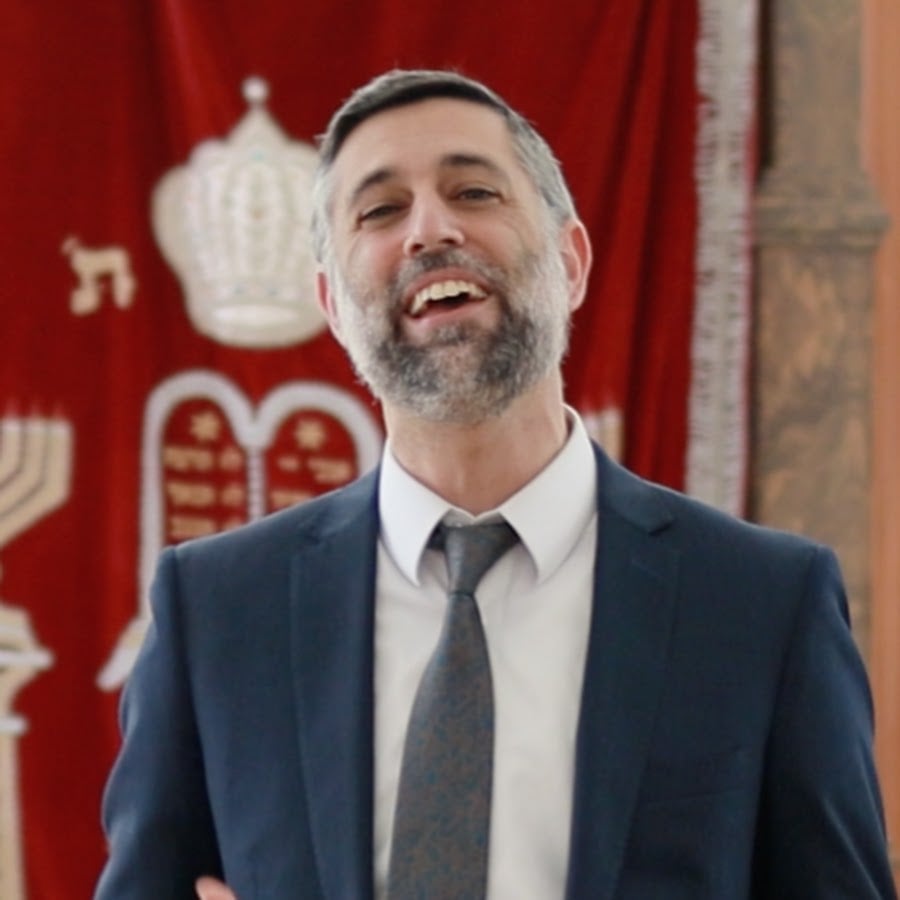
Why does Hashem instruct Avraham Avinu to 'pave a path for his children?' How does this give a different twist to the idea of 'maaseh avos siman l'banim' - the events of the forebears are symbolic of what the children are to go through? Why do all of these parallels between the events of Avraham's life and the lives of the people of Israel all focus on the descent to Egypt, and ultimately the redemption from Egypt? How does Avraham teach the people of Israel if he is only a memory from the past? How can we teach our children by switching to being an example as opposed to instructing directly? Find out in this week's Parsha Podcast.
Categories:Music
Comments
Transcript
Auto-generated transcript. Not time-synced to the video.
You're listening to the weekly partial
podcast with Ari Goldwag, recorded with
our shows and our learning assistance in
Ramat Beit Shemesh, Israel, 5787, 2026.
This week's parsha is parshas Lech
Lecha.
The Jewish people,
Avraham Avinu,
Abraham, our forefather, is
the beginning
of the Jewish people, and Hashem
commands him and commands all of us,
Lech Lecha,
go,
go for yourself,
get yourself moving,
get yourself moving towards Eretz
Yisrael, to the land of Israel.
And in his travels and in his journeys
that we talk about in our parsha this
week, so one of the
encounters that he has after he arrives
in Israel, he also has to go out of
Israel.
And he ends up in Egypt.
And there in Egypt, he's faced with an
incredible
nisayon, one of the 10 nisyonos,
one of the 10 tests
that he is to face in his lifetime.
And there,
he tells his wife to claim that she is
his sister. She's taken into
the house of Pharaoh.
And indeed, in the end, of course, she's
released.
And Pharaoh gives to Avraham Avinu, to
Sarah,
when he gives to come out of there with
great wealth.
I'd like to share with you a midrash
and a very deep idea,
and I think that it very much has a
profound
teaching for each of us.
V'Avram heitiv b'vura, v'hi leitzanei
v'oker,
v'gomer.
V'yitav lePharaoh anashim v'shifchos, so
the pasuk says in chapter 12, verse 16,
that
after Pharaoh realizes the mistake that
he's made, he gives gifts to Avraham
Avinu,
which is very interesting.
And he commands the power of commands
to some some of his men to accompany him
to send him out to
to keep him safe.
Rebbe Pinchas b'Shem of Hoshaya Rabbah
Omer
Or Kodesh b'Chol Avraham Avinu Say
u'Chveish es derech l'vnei vonecha.
Let me just point something out which
it's a little bit hard not to notice,
but
it's it is possible not to notice
that if we look at the story of Avraham
Avinu
the fact that he goes down to Egypt, the
fact that he is
um oppressed by the Egyptians
they take his wife
then he ends up going out with great
wealth. It sounds very similar
to what happens with the Jewish people
themselves, the nation that would come
out of Avraham Avinu.
Midrash tells us
Rebbe Pinchas in the name of Rebbe
Hoshaya the Great says
that Hashem said to Avraham, "Go out and
and
pave the path
before your children."
Which means to say
in the most simple understanding of it
that we have a concept of the Maaseh
Avot Siman Banim and this this is what
I'd like to talk about today
that the actions of the forefathers
are indicative
maybe they're a lesson for or maybe
there's a parallel or maybe
energetically, spiritually whatever the
forefathers do, their children are bound
to do as well.
But the language of the Midrash is
simple, it's go out and pave the path
for your children. The things that you
experience, Avraham Avinu, that Abraham
experiences
Torah tells us these stories not just
because they're interesting, which they
are,
not just because we learn about Avraham
Avinu's greatness, the fact that he's a
prophet, the the power of his prayer,
the greatness of his kindness,
we do want to learn from that, but it's
telling us that
he was the foundation of the Jewish
people and his spiritual genetics
and the actual events of his life
were implanting,
paving the road,
implanting the seeds for what would be
in the future,
paving the road that his children would
would walk upon.
When Avraham Avinu was told
go to Eretz Yisrael, that's for all of
us to know that we have to go to Eretz
Yisrael.
When he gets sent into Galus, that's for
all of us to know that part of life is
being sent into exile.
And when he experiences what he
experiences in Egypt, he comes out with
great wealth,
that's also something that has to do
with us.
Says the Medrash in more detail, "Ad
me'od kol ma she kasuv ba'Avraham, kasuv
b'vanav." We find that everything that
it says by Avraham Avinu,
it also says by his sons,
his offspring. Ba'Avraham kasuv, "Vayehi
ra'av ba'aretz."
In regards to Abraham, it says, "There
was a famine in the land in Eretz
Yisrael." Therefore, that's why he went
down to Egypt. Kasuv, "Vayehi ra'av
ba'aretz b'Yisrael." I'm sorry.
B'Yisrael kasuv, "Ki yesh shanah achas
ra'av ba'aretz." Pasuk says
that
the Jewish people, the the Israelites,
specifically the children, the offspring
of Yaakov Avinu, of Yisrael,
they came down to Egypt as well as a
result of a famine.
Ba'Avraham kasuv, "Vayeired Avraham
Mitzrayimah lagur sham."
In regards to Abraham, it says he went
down to Egypt to live there.
B'Yitzchak kasuv, "Vayeired Yitzchak
Mitzrayimah."
It says the same language, they went
down to Egypt.
Be Avram Sifla Gursham Be Yisrael Sifla
Gur Ba'al Smon.
The Israelites also said, just as Avram,
it says by Avram he went to live there.
We also went to live there.
And by the way,
when you go to live somewhere, of
course,
you're going to be impacted
by that location,
by the culture,
by the people,
by the style,
by their clothes, by their language, by
the way they think.
Be Avram Sif Ki Kaveen Avram Be Eretz
Kenaan.
Be Yisrael Sif Avram Kaveen Ba'aretz.
Using the same language, the famine was
very heavy in the land.
Both by Avram Avinu and by
the Israelites. Be Avram Sif Va'Yhi
Ka'asher Hechriv.
Yisrael Sif Ki Sivu Par'oh Hechriv.
The parts here in the middle of this
concept to teach you something
very beautiful that the Marzu says
that it says by Avram Avinu,
that's what the Medrash is saying, that
that he came close.
He came to the land of Egypt.
It also says
in regards to the Jewish people,
interestingly, doesn't say of the Jewish
people, it says about Par'oh that
Pharaoh came close.
He was chasing after them and he came
close to them.
So, the Marzu points out, one talking
about Avram, one talking about Par'oh,
how does that have to do with the people
of Israel?
And he explains and he says that after
he
wrote down this idea, he saw in the
Zohar which
which I love the language, he says "Be
Simchati Ki Kivanti Be Da'at Simcha Le
Mitat Shel Torah."
The Marzu was excited
because in in trying to understand the
Medrash
he was Mechaveen exactly to what the
Zohar says
when he explained the Medrash. But he
explains the Medrash beautifully and he
says
that Paro, the say was he he came close
to the Jewish people. He was he crave.
And tell us that it means that he caused
the Jewish people through his chasing
them to come close to a sham.
Right?
The whole
the if if we could describe the journey
of Abraham
or the journey of the Jewish people
through Egypt and and coming out of
Egypt and being faced with the challenge
and be slaves, etc.
The whole purpose of it was he crave.
When he runs after them, they turn to
God. They turn to a sham and they say,
"Sham, please help us. Sham, please save
us."
The effect of
having an enemy like Iran, having an
enemy like whatever the enemy of the
Jewish people is, we always have an
enemy.
But the purpose of it is to cause us to
come close to God.
It's to not mistake where our salvation
comes from.
To remember that we only exist
because of our connection to
So Paro brought us close by chasing
after
by chasing after us. He brought us close
to our creator.
He awoke us to our to our spiritual
connection to a sham.
And I don't know if you know also
by enduring the difficulties, the
challenges
that he goes through in Egypt.
His wife is kidnapped.
These challenges cause him to pray like
we mentioned earlier. He was a nobody,
he was a prophet.
And he was and he prayed on behalf of of
the Pharaoh.
There was a threat of death which I was
addressing when he told his wife to say
that it's his sister, that she's his
sister.
But he was afraid they he be killed.
Indeed, later on
the babies of the Jewish people were
thrown in the in the Nile. They were
killed. The boys were killed. The women
were not. Interesting.
Abraham Avinu says, "Tell tell her that
you're my sister so that
things will be good for me."
Which in the partial shot means
I won't get killed. That's good.
But as as you read the later on, we do
see that Abraham
the Pharaoh gave him all kinds of
possessions
because of the fact that
he had oppressed him, it seems.
So too
we'll find
that
there was something good that was done
through a lie, interestingly. And
Abraham Avinu says to his wife to lie
and say that it's his sister.
That she's his sister.
There was also a lie that the that
Pharaoh Pharaoh told the Jewish midwives
that they should kill the children the
babies of the Jewish people. And they
said, "Well, but the women were too
strong. By the time we got there, the
baby was already born. We couldn't kill
them."
So they lied.
And things worked out well for them,
right? God God was pleased with that.
In regards to Abraham, it says, "It was
when he came to Egypt."
It speaks about the names of the people
of Israel who came down to Egypt.
In regards to Abraham, it says
that he left when he left Egypt, he was
very heavy. He had a lot
of
cattle.
And that he had received as gifts from
Paro.
He struck the Egyptians because of his
own.
The says in Tehillim in Psalms chapter
105 verse 37
that the Jewish people were sent out
with a lot of gold and silver.
Right. The says also small ice.
They had gold and silver and clothing
that they received
as we could say parting gifts by the
Egyptians.
So it parallels how Avram Avinu was also
given these gifts. He also left with
great wealth.
But Avram Avinu Paro he struck the
Egyptians because of his own.
Right, we read at the beginning that
Paro sent some people to go along with
or to encourage Avram Avinu to leave.
Protect him maybe. So too
when the Jews left Egypt, they were
strongly encouraged to leave. Get out of
here. We don't want you here anymore.
The Avram Avinu the massive struck the
massive in Israel.
But it just finishes off by saying
that by Avram Avinu it says that he
continued on to his journeys.
And of course we know the Jewish people
also
continued on to their journeys
as they
as they went through the wilderness.
So Avram Avinu
he is so less than that.
He paves the path. He he
he trods the path that we are all to go
upon.
And he and he makes that path
he makes it clear whatever he's going to
do is what's going to happen to all of
us.
Okay, so this is a powerful lesson and I
and I would I'd like to say
that we all have that experience.
We all have that type of
a cry as I would say responsibility.
Because whatever we do
whatever path we take
our children will also take a parallel
path.
And so we have a responsibility to
ourselves and to the next generation
to face off with our nisyones, to face
off with our challenges and recognize
that they're opportunities as we said
before. For par yechruf,
the challenges themselves can bring us
closer to Hakadosh Baruch Hu and if we
do that, so then we are paving the way
that our children's situations and
challenges should also bring them closer
to Hashem.
Now,
I'd like to point something out
and really take this as a lesson
for the way that
the right type of chinuch, the right
type of
guiding our kids. Of course, we've been
along this path. We've been We've had
some experience, maybe 20, 25, 30 years
more of experience than our kids by the
time they come around and get into the
age that we were.
Right? So we feel that,
you know, we have paved the path. We
expect them to walk on this path.
That's a natural feeling, that's a
normal feeling, that's a human feeling.
We want to see our children succeed. We
also want to see them follow in our own
footsteps. We feel like we've found a
path that's good for us, that's worked.
We want them to continue in that.
And
I would like to bring out something from
Avraham Avinu and the way that he
is the is the forebear of the people of
Israel
and the way that he teaches us
to to go on that path.
And that is clearly, you know, Avraham
Avinu did not live
in the time that the Jewish people were
going down to Egypt. Avraham did not
live in the time when Jewish people came
out of Egypt.
Avraham did not live through all of the
experiences that his offspring had.
And yet,
the Torah is showing us that
he paved path for them.
He served as an example for them
how to face the challenges,
of how to be a machnis oreach, how to
bring in guests, how to be a certain
type of person that he was.
I'd like to share with you something
that I
I don't remember if I've mentioned it in
the parsha podcast,
but
over last year and a half
plus
I've had the opportunity
had the idea, which was taught to me
that I do every single morning, and that
is that I write
I write every single day except for
Shabbos, I write every day
as if Hashem is speaking to me.
I write. I'm not claiming nevu'ah here.
That's not what it's about. It's just
what if if I would have a conversation
with Hashem,
what would it look like? What would he
be telling me today? What would the
morning message from God be?
And
so I do this every day, and I and it's
very helpful for me. I I find it to be
very useful.
I connect into my highest self. I
connect into what I think Hashem wants
to say to me today.
And sometimes
something comes out that I don't know if
I would have thought of myself.
Maybe Hakadosh Baruch Hu is guiding my
hand, guiding my thoughts.
But I wanted to I want to share with you
a little bit of what I wrote this
morning.
And I wrote like this. And And this is
the idea which I'd like to bring across.
Now, this is Hashem speaking to me.
Know that I believe in your unique
talents and abilities.
And know that the people I've placed in
your life
you hold so dear
they each have a unique destiny that is
theirs.
Your job is to facilitate them being who
they are.
Be careful not to confuse your destiny
with theirs.
And always remember that I am there for
each of them
and for you
to support and bring you all to the
world I wish you to create.
Lech lecha.
Go on your unique path
with your unique personality and
abilities.
Be like Avraham
in love and kindness
encouraging people's relationship with
me.
Help them see
I am their source.
Keep reminding yourself as well.
And I, you know,
as I was thinking about this midrash and
I was thinking about what to say,
so it it was clear to me
that
in our lives we have people who Hashem
places
as our children,
as our
as those who we are meant to have
influence on,
as students,
whatever it is, the people in our
vicinity who watch us, who see us. We
interact with our friends.
And
there are different ways of approaching
the way that we have an impact on those
around us,
whether it's our children or our
students or our friends.
And
I think I, you know,
I see in the midrash
that the midrash is telling us something
profound
about how we pave the path for others.
Avraham Avinu paves the path for all of
Klal Yisrael.
But he's not directly instructing.
He's not saying, "Klal Yisrael, do this.
Go down to Egypt when there's a famine."
He's not saying, "Klal Yisrael, face off
your challenges and connect Hashem."
He's not saying, "Klal Yisrael, don't
worry.
You're going to you're going to leave
Egypt with with great wealth."
It's not an instruction with words. It's
not a direct statement. It's not
it's not a mussar.
It's not a tochecha.
It's not a rebuke. It's not a statement.
It's just
this is how I lived my life.
This is These are the events that
occurred to me.
And you will all
have similar events in your lives.
And you will be able to have me as an
example
of what to do
and how to face your challenges and how
to come out of those challenges
even more connected
to Hakadosh Baruch Hu, to Hashem, to
your creator.
And how to come out of those challenges
and reap the rewards
of those challenges.
Come out of Egypt with great wealth. And
the physical wealth, the gold and the
silver is just representative of
a spiritual
type of wealth,
which is the relationship that Hakadosh
Baruch Hu
has with us. And it's the Torah being
received and it's all of those things.
We as parents, we as teachers,
we teach best by example.
And we can make a mistake and think that
I need to instruct.
And sometimes I do need to instruct.
But 99% of the teaching,
99% of
paving the path for my kids
is done by them seeing who I am, what I
am,
and what I do.
And they may not even notice or or
realize
that they've done that they are
following my path. It's deep. It's It's
subconscious.
I was recently, this past week, I was at
a a shiva of a friend of mine who his
father passed away.
And he was commenting on how
um
the realization that he has
of how much
of who he is
is because of who his father was.
And and I commented
that
we reach a certain age and we
notice
for a wise, I would like to think I'm a
little wise,
we notice that much of who we are
is almost a carbon copy of who our
parents are.
And and our children
will at some point realize the same
thing.
And and I think that there's a
resistance
when we
overtly say to our child, this is how
you should be,
there's of course that brings up a
resistance. They they can't receive
that.
Each person wants to be who they are.
Each person wants to be their you know,
make their own path in the world.
But of course we don't make our own path
in the world. That's just not how the
world works.
To some extent maybe we do.
But even those people who have forged a
different path perhaps than their
parents
or who have different talents and
abilities than their parents
or who, you know,
we don't all go exactly in the way
exactly of our forebears, but
even when we do,
even when we don't,
or we do,
that's inside of us. Remember a comment
from Rabbi Kive Tatz.
Rabbi Kive Tatz is a an amazing teacher
of Torah.
And he was part of the Ba'al Teshuvah
movement in South
South Africa
decades ago and went on to become a
great teacher of the Jewish people.
And he commented how
many of the children of those of those
families weren't as religious, they went
on to become more religious.
But they had to admit
that who they were,
their commitment to truth, their
commitment to Yiddishkeit that was new
found for them, but it was founded on
the
type of people that their parents were.
The type of truth-seeking people that
their parents were, the type of of
people who were committed
to
the specialness of their Yiddishkeit.
And that brought their children to a
maybe a different level,
maybe beyond who their parents were, but
we don't always see, we don't always
recognize that who we are is a result of
who our parents were
or are. And it's it's important for us
as parents
looking to our kids
to know that
the best teaching
doesn't happen
with words. The best teaching happens
with action.
The best teaching happens by who we are.
Avraham Avinu teaches by example,
exactly who he is.
The path that he goes through, the way
that he faces off with his challenge,
the prayer, the tefillot that he says,
the the getting out of the situation
with a with a
deeper connection to Hakadosh Baruchu.
Coming out with great wealth.
These are just
examples for us.
The path that he travels is the path of
Klal Yisrael.
The the coming to the Holy Land, the
Lech Lecha, going into exile, coming out
of exile, enduring the challenges. These
are all the paths that the Jewish people
are going to inevitably
walk through.
>> [snorts]
>> But he's not there to actually guide us
when we reach those places. He's not
alive anymore.
But his story is still there.
We still remember who he was.
Interestingly, one of the things that I
my my The Yeshiva would mention is that
there was a particular historian who
would speak about the Jewish people and
he would say,
"What's unique about the Jewish people
is that they live in a way that Avraham,
Yitzchak, and Yaakov are
still alive. We live with the story of
the Avos
and
they're still
uh they're our grandparents. They're not
a great great great great These are not
legends from from 3 and 1/2 thousand
years ago, 4,000 years ago. These are
not legends. This is alive. The Torah is
alive.
The story is relevant to me.
The story is my story.
That's what the Medrash, I think, is
teaching us.
The Medrash is teaching us that we have
these examples.
We have these people who went through
things in life and and we learn from
their example.
Not so much from their teachings.
We learn from who they were and how they
lived. The Torah has many stories.
The Torah teaches through stories cuz we
learn the best through stories. Our
guard is down. Our resistance isn't as
strong. Hearing a story of how If I hear
about how somebody
failed
and picked themselves up, that's much
more more powerful for me
than if someone tells me, "Hey, you
failed.
Pick yourself up." It's not the same.
And it's essential It's essential
that we recognize this type of teaching.
We are there for our kids.
We have gone through stuff before.
And we teach through our example and
that is the best teaching.
Who we are.
How we emotionally approach things.
How we use it
to intensify, strengthen our
relationship with the Kodesh Boruchu.
That is
the best teaching that there possibly
could be.
So, I want to bless you
and ask you to bless me. Hashem should
help us
that we all
should be able to learn
from Avinu.
we all should be able to see the path
that he paved for us
and sham should help us that we should
be able to do the same for our kids
and we should pave that path
and be that example for them
so that they can succeed
in their service of a
thank you so much for listening have a
wonderful Shabbos.
>> This podcast was made possible through
the gracious donations of listeners like
you
for more podcasts like this please visit
www.arigoldwag.com
[music]
or search on iTunes Ari Goldwag.