Transcript
Auto-generated transcript. Not time-synced to the video.
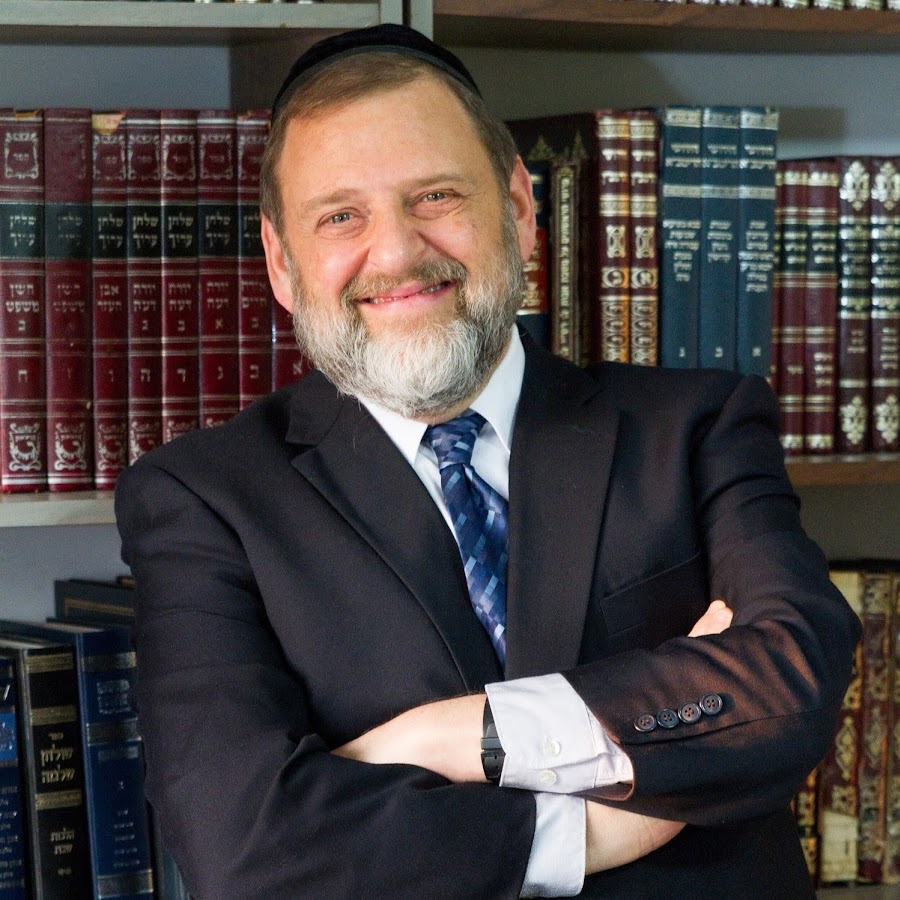
Hi, this is Rabbi Orlofsky with our
question and answer series.
What are our lives for? Are we here to
prepare for Olam Haba? Are we here to
bring Mashiach? Do the two connect? How
can we live for both?
Because it's a process.
Meaning,
Hakadosh Baruch Hu created the world and
the world was perfecto. We had one
mitzvah, which was a mitzvahs lo
sa'aseh.
Don't mess up the world. So, don't eat
from this tree. When you eat from this
tree, death will come to the world.
Terrible things are going to happen.
Don't eat from this tree. That was it.
But,
mitzvahs assei are mataking the world.
They fix the world. There was nothing to
fix. You didn't need any mitzvahs assei.
And so,
um just don't mess up the world.
And had Adam and Hava not eaten from the
tree, they were created on Friday, they
would have gone into Shabbos and that
Shabbos would have been Olam Haba.
Now,
the term Olam Haba is a little tricky.
Machlokes between the Rambam and the
Ramchal what we mean by Olam Haba. We
assume that when we say Olam Haba, we're
talking about the Olam Hanashamos,
wherein we die and our soul goes up to
Olam Haba and we just enjoy the
spiritual pleasure of being close to
Hakadosh Baruch Hu. Okay.
Um
the
Ramchal says Olam Haba is the world of
Techiyas Hameisim.
Meaning,
if they never ate from the tree, they
never would have died. So, what would
have happened? They would have gone into
a world of perfection. That would have
been Olam Haba, according to the
Ramchal. That would have been it. You
wouldn't need the resurrection cuz
everybody was still alive. There was no
death in the world. And you would have
just gone from one stage to the next.
But you had to have spent some time in
this world because of the problem of you
will not enjoy the pleasure unless you
earned it on your own. Otherwise, you're
just
uh a poopa. You're just taking that
pleasure. Yeah? Uh you haven't earned
it. When you earn it, it's that much
greater.
So, we had to have do something, but we
didn't have to do a lot. Yeah?
Of course, they messed up their one
mitzvah, and that has led us on a
6,000-year detour.
So, at some point,
we have to get the world back to Gan
Eden. A world where the world is in
perfection. There's no hunger. There's
no disease. There's no yetzer hara.
There's no death.
That's called Yemos Hamashiach. We have
to get the world back to Gan Eden.
Once we get the world back to Gan Eden,
which is Yemos Hamashiach,
then the world can go into Techiyas
Hamaysim, and everybody who
unfortunately was born at the wrong time
can now come back and enjoy it.
And uh they'll come back into this
world, according to the Ramchal, and
you'll have Olam Haba in this world.
According to the Rambam, Techiyas
Hamaysim is a certain period of time,
and after that, you leave your body and
then go to
what we think of as Olam Haba.
The Ramchal refers to that as Olam
Hanashamos, where
at this point, it's just a waiting room
until Techiyas Hamaysim, and you come
back down.
According to the Rambam, that's the the
ultimate uh the ultimate fulfillment.
But, uh the Ramchal holds that the way
Hakadosh Baruch Hu created the world,
which is a human being in a physical
body, is the ideal, and that's how we're
supposed to come back down.
So, uh that's the process. So, when you
say you want Mashiach, what you're
saying is I want the world to return to
an Eden-like existence where there's no
evil and there's no disease and there's
no hunger and there's
you know, there's no war, there's no
everything is wonderful.
Right? That would have happened by the
way if we had gotten the first Luhos,
the first set of tablets.
>> [snorts]
>> That would have we got those first
Luhos, that would have accomplished that
first level.
And then when we went to Israel, we
would have had
That was the way it was supposed to have
worked, but unfortunately
it did not work out that way. So we're
still waiting for the world to go back
to the way the world was supposed to be.
This is David Eliavsky with our question
and answer series.