Preparing video...
0:00 / 0:00
Vayera - Jerusalem City of Seeing
404 views
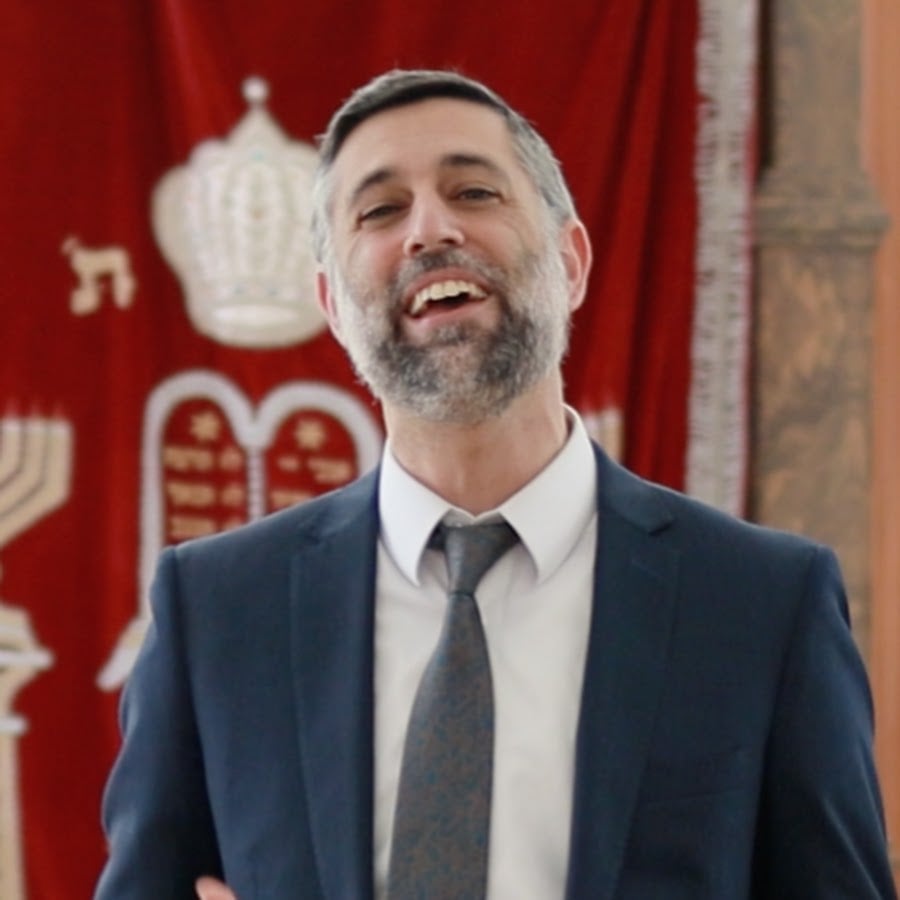
What is the concept of Yireh-seeing and appearing and how does it relate to the concept of Yirah-awe, which in Hebrew has the same letters? How does the Ram and its horns relate to the concept of the Yirah-Awe and the 'Feared One of Yitzchak?' Why is Yerushalayim-Jerusalem composed of the word Yirah and Shalem-perfection? How does the binding of Yitzchak arouse Hashem's mercy, as we say on the High Holidays? What is the meaning of Hashem's prayer to 'see' the building of the Temple? What is the meaning of the word Aryeh-Lion being the same letters as Yirah-Awe? Find out in this week's Parsha Podcast.
Categories:Music
Comments
Transcript
Auto-generated transcript. Not time-synced to the video.
You're listening to the weekly partial
podcast with Ari Goldwag, recorded with
Hashem's never-ending assistance in
Ramat Beit Shemesh, Israel, 5787-2026.
This week's parsha is parshas Vayeira.
And I'm going to head straight to the
end of the parsha, but I will mention
that at the beginning of the parsha,
Hashem reveals himself, Vayeira elav.
Hashem is seen by Avraham.
And today, we're going to talk about the
idea of seeing.
What is the concept of seeing?
Because we're going to see
that Avraham Avinu refers
to the holy mountain of God, to the Har
Hamoriah,
as a place of seeing.
It's a place of seeing Hashem, as a
place of Hashem seeing us.
It's the mountain where Avraham Avinu
goes
and binds his son, Yitzchak.
And
it's a central story to Klal Yisrael
because it's that zchus, it's that merit
that we mention every year on Rosh
Hashanah and Yom Kippur. It's the merit
that we have to continue to exist.
It's that self-sacrifice, that
willingness to be bound, the willingness
to sacrifice.
And we're going to see what comes out of
this idea. What is the power of seeing?
What is the power of yirah?
It's also we're hearing about Jerusalem
every day.
Yerushalayim.
Right, it's called Yerushalayim as we'll
see in the Medrash, as we'll see in the
Rabbeinu Bachya,
because of the name yirah. Yerushalayim,
that first part is yirah, is the seeing
of Avraham Avinu.
I'd like to start off with the end of
the story of the Akeidah.
And
the Torah tells us
Avraham Avinu was told by Hashem to
bring up his son
for an olah, for a sacrifice. Avraham
goes with Yitzchak. They go up on the
mountain. He binds his son. And then,
the malach comes out and says,
"Don't do anything to him."
Ki Atah Yarei Elokim,
the first hint.
God sees, Hashem sees that you fear
Hashem. The word Yarei,
which means to fear,
and the word Yirah,
which means to fear, are the same
letters, the same really the same word
as the word Yireh, to see.
There's some connection between fear
and seeing. Or I prefer the word awe.
Yireh Elokim, you are in awe of God.
You are a God-fearing person means that
the person
has incredible respect for God.
Ki Lo Chasafta Es Bincha Echad Mi Meni,
you didn't hold back your son, your only
son from me.
Then the Pasuk says,
so in chapter 22, verse 13, Va Yisa
Avraham Es Einav Va Yar V'Hinei, Ayil
Achar,
right? Avraham picks up his eyes and he
sees, Va Yar, he sees
that there's
a ram after
after this whole story, he sees a ram.
Ne'echaz Ba'Savach Ba'Karnav, the ram is
tangled up in the thicket with his with
his horns. Va Yelech Avraham Va Yikach
Es Ha'Ayil Va Ya'alehu L'Olah Tachas
B'no. Hashem placed there
providentially
an animal to bring as a korban, they
didn't come up there for nothing.
And he sees the ram.
He sees it.
Then what does Avraham Avinu do after he
brings his korban?
Va Yikra Avraham Shem Ha'Makom Ha'Hu
Hashem Yireh,
Avraham Avinu interestingly calls the
place God sees.
Hashem Yireh, Hashem will see. That's
the name of the place, Hashem will see.
Asher Ye'amer Ha'Yom, about which it is
said today, B'Har Hashem Yera'eh,
on the mountain of God,
the translation here in Rabbi Aryeh
Kaplan's book is,
"On God's mountain, he will be seen.
He with a capital H, God will be seen.
Which reminds me very much of
the possuk which it says and the
Rabbeinu Bachya quotes
that
it's on the mountain of God that we will
be seen.
Right? There's a mitzvah of re'iyah.
We have to come up to the mountain of
God on the shalesh regalim
to be seen, to see.
Now, as a result of of Avraham Avinu
doing this incredible thing, so he sees
God as it were, he sees a malach,
which
as Rabbeinu Bachya also points out,
the malach
is not a regular malach.
There are different kinds of malachim.
There are malachim that are what's
called neti'us, which means that they're
planted. They're not separate from God.
They're attached to God. They're just an
expression of God.
God is is It's like they're a glove on
Hashem's hand, as it were.
There are other kinds of malachim that
are
somewhat separate, have some separate
existence.
But this malach is Hashem speaking.
Hashem speaks.
And I'd like to share with you both
Rabbeinu Bachya and the Medrash.
Rabbeinu Bachya also quotes the Medrash.
I'd like to first read to you the
Medrash inside.
It says like this, "Vayikra Avraham shem
hamakom hahu Hashem Yireh."
So, Avraham calls this place after this
incredible nisayon, right? To to take
his son, his only son, who he knows the
future of Klal Yisrael. This is it. This
is the future.
And Hashem says to take Yitzchak and
slaughter him.
So,
afterwards he calls this place Hashem
Yireh, God will see.
What is it that God will see?
Yannai can says
that Avraham Avinu was saying to God,
"When you told me to take my son
and to sacrifice him,
so I had I had a response.
It It didn't seem to make sense.
As one of my
Previously you told me that Yitzchak,
this child, who at this point is 37, so
we're talking about a prophecy that
happened 38 years before.
Yitzchak, my child,
is destined to be
the one to with through whom I will have
a nation. I will have children and
grandchildren and great-grandchildren.
Now you can calculate his age.
Now you're telling me take this child
and bring him as a sacrifice.
Right, I could have I could have
responded. I could have said, "Hey, what
what's going on?"
Avraham Avinu says, "Heaven forbid, I
didn't I didn't do that. I didn't
question.
I went forward.
I went forward with the tzivui. You told
me to do something, I did it.
I overcame my rachmanus. I overcame my
fatherly love. My natural tendency
to
to be merciful. Why? Cuz I saw that it
was your will that I do something
different. Yehi ratzon milfanekha.
This is what Hashem This is what the
prayer of Avraham Avinu was, that Hashem
should see. Hashem yireh.
May be your will, Hashem.
When Yitzchak When my son, who I was
ready to overcome my own inclination
toward,
when he has children and grandchildren
and great-grandchildren, generations
thousands of years afterwards, who do
something wrong,
they do wrong things, they do
averos, they sin, they do negative
actions,
I want you to always look at this.
Hashem yireh means Hashem, you will
always see my willingness to give up not
just to sacrifice my son, but to
sacrifice my own innate tendencies to do
that which
I know is your will.
So Hashem, I want you in the future to
give up your own judgment, your own
innate tendency, so to speak,
which is to judge the Jewish people for
having done wrong.
Release them from it. Give up on it.
Fill Fill yourself up instead with
compassion.
It's very interesting.
So, that's the first point. So, he's
dominating was as he completes the act,
as he brings that carbon, the the
Messiah is over, the test is over. He He
He passed with flying colors.
He says, "Hashem, I want you to always
see this."
Which is what we always say every year
Rosh Hashanah and Yom Kippur, we always
remind ourselves of the Akedah. There
are many who actually read the Akedah
every day.
Avram karah she Yirah.
She never make her Avram she never make
her who Hashem Yirah. Now, the Midrash
says something different. Seems to be a
disconnected. Talks about
the fact that Yerushalayim has a name,
Jerusalem, the place
where Avraham Avinu brought his son, Har
Moriah.
Har Moriah, Mount Moriah, is the
location of Har HaBayit, where the Beit
HaMikdash is. The Western Wall is the
wall of the Temple Mount.
So,
why is it called Yerushalayim? Says the
Midrash something we said before.
Vayikra Avraham
Shem HaMakom Asher Hashem Yirah.
Avram called it Yirah, that place.
Hashem Yirah, God will see.
Shem called it Yerushalayim.
The son of Noach was also known as Malki
Tzedek. He referred to the place, that
same exact place, as Shalem. She
Ne'emar,
as the possuk says, this is in
last week's parsha.
Malki Tzedek Melech Shalem. Malki
Tzedek, who we know is Shem,
is the king of Salem.
Right? Jerusalem.
All right, let's make it clear. Kori ani
oseh Yireh kishim she karah se Avram.
Shem adam Yisrael.
So, Hashem says, "What am I going to
call this this city? If I call it
Yira, which means to see, as Avraham
Avinu called it, so then
One second.
Something like that.
So then, Shem, who was the righteous
individual, would get upset. Hey, what
about my name?
I mean, I say Shalem, if I just call it
Salem, Shalem, which means whole, which
means perfect. Avraham Avinu Yitzchak
Avinu
So Avraham, who was a righteous
individual, will complain. And I already
say Yerushalayim.
I'm going to I'm going to
combine the two names. I'm going to
I'm going to suffuse the two names into
one.
And I will call it Yerushalayim.
Which he called it Shem Yira Shalem.
Yerushalayim.
As they two called it. One called it
Yira, one called it Shalem. Yira Shalem
Yiru Shalem.
Okay?
Now, there's one more little piece in
the Midrash, which also is quoted by the
Rabbenu Bahya, and I think it's really
important.
Rebbe Akiva said by Rabbi Elazar Azarya,
"I shall aim."
Also, the Kadosh Baruchu Sukkah.
There is really two aspects here in the
city of Jerusalem.
Jerusalem, there's an aspect of seeing
God.
There's an aspect of perfection. Aspect
of wholeness, which is indicated by
Shalem.
Before we get to wholeness and and
shlemut, perfection, which is really the
Messianic age, when everyone will come,
they will like rivers of human beings
come to Jerusalem.
They will pour into Yerushalayim.
>> [snorts]
>> So, before it reaches that state of
perfection,
Also, that Kadosh Baruchu Sukkah, where
he must build the Torah Hashem made a
temporary dwelling place there, a
Sukkah.
And he was praying there. She nemar by
Yerushalayim Sukkai.
More on what I now say by Tzion.
God placed in Shalem,
in Jerusalem,
his Sukkah, his temporary dwelling
place, which is a reference to the Beit
Hamikdash,
because at first it wasn't temporary. It
only lasted for a certain amount of
time. Well, you know, it's Zion.
And his place of dwelling he made
in Zion, Jerusalem.
Well, I am he wrote some. What's it What
was Hashem's prayer?
What was Hashem's prayer?
You wrote it being on base
there's an extended prayer that's
brought down. I'd like to read to you.
It says, "You wrote it you who bought me
a good name of condition."
May it be a will May it be my will. It
is God praying, which is an interesting
idea.
And God says,
"May it be my will, or may my will
manifest that my children are are good.
They do what's right. Condition and
they're holy.
Condition of being on base.
So that I will see Again, I will see
the building of my my base home in the
bush.
The Zion Hashem year of being on base.
That's what you I am was referring to.
He said, "Hashem Hashem will see." So
before we said it means Hashem will see
the great act of goodness.
And what's going to be the outcome?
Hashem will see that we are good and he
will see the building of his holy
temple.
The language of the measure should be
inside. That was I'm reading from the
ashes version.
The measure should be inside. You wrote
it being on base. May it be my will.
May what my will manifest with the
building of my house.
The Hashem said I got to spoke with base
home in the choir of Bonnie choir of
Bonnie.
Hashem showed I am a being something
when he said Hashem era God will see. So
as we just said, Hashem will see the the
building of his being on base. What was
What was it that sparked this?
It's very interesting if you think about
it. Hashem showed him
a base home in the bush which was built
and destroyed and then built again
ultimately.
According to another year or so it was
built, destroyed, built, destroyed and
built again.
So again we have
This is the this is the place that's
going to be built. It's the the mountain
of God
that
we are all to be seen.
Where Hashem is seen.
We
find that the base of English will be
destroyed. Refers to it just as the
the Har Hashem the Har Hashem means it
doesn't have a doesn't have a a house
there.
It refers to [snorts] it as
the place where everyone is seen and
refers to it as the Har Hashem which
means the mountain of Hashem without a
house.
Plus it refers to the mountain of God
which is desolate.
But then again it says a third time
in our Sukkot in So read it carefully.
>> [sighs and gasps]
>> God will be seen. Bonnie Michelle lost a
lovey. It will be rebuilt. The base of
English will return in the future.
But it says in Psalm chapter 105
verse 17 it says on the mountain of
Hashem I'm sorry Hashem built
Bona is past tense he built Zion he is
seen in his honor.
So over and over again we have a concept
of fear of year of of being seen of
seeing
of college trail Hashem wants to see us.
He wants his will to manifest. He wants
to see us being good doing what's right.
Even when we make mistakes he doesn't
look at that. He sees the goodness of
our you know the Akeda.
A lot of ideas there in that measure.
Quite a beautiful measure.
I'd like to turn your attention to
turn our attention to
the Ramena Machai.
The Ramena [snorts] Machai tells us some
amazing things.
Get this, unbelievable. First of all, he
points out that there's an aisle, right?
Avraham Avinu, after Abraham
was ready to sacrifice his son, Hashem
says, "Stop." So, he finds the aisle, he
finds the ram, as we said. The ram is
caught up by its horns.
And we know there's a concept of the
horns of the aisle. One horn was blown
by our scene of Mount Sinai. One horn is
going to be blown in the future
by Mashiach. What is the concept of the
horn?
And see, this is unbelievable how it
relates to the concept
of seeing and fear.
It says like this.
Um
While there comes after she comes after
she comes after she comes after she
comes after she comes after It says a
very similar concept to what we just
said. So, it brings another measure. The
measure says that it's caught up in the
thicket by its horns. This represents
the fact that the Jewish people
right? The aisle, let's think about it.
The aisle, the ram is interchangeable
with the Yitzchak, right? Cuz Yitzchak
is supposed to be sacrificed, but
instead the ram comes in its place. So,
we have to understand that the ram
represents the Jewish people, just like
Yitzchak is the the father of the future
nation of Klal Yisrael, so
the ram also represents Klal Yisrael.
They're caught up in the thicket by
their horns.
Call you my Shoshana must have committed
this. We're we're we're caught up with
our averas. We're caught up with all
kinds of troubles and problems, right?
Now, the Shoshana Shofar shall I also
what do we do? We take
we remember
we remember our mistakes.
We look at we see
intrepidation. We blow that shofar which
represents that which was caught up in
the thicket.
After she comes after she comes after
she comes after she comes after she
comes after
We're caught up with our various, we're
caught up with the nations of the world
who who rule over us.
Ultimately, we're going to be we're
remembering with that blowing of the
shofar, we remember we're caught up.
But, there's a ultimately there's going
to be a blowing of the shofar.
Blowing of the ram's horn.
Which will signal the end of galus,
which will will signal our redemption.
Hashem is shoving out Yitzchak.
God will blow on that great shofar with
that as the zal.
And our sages
they're of the opinion
that the shofar which was blown as we
said, the shofar that was blown at Mount
Sinai when the Jews received the Torah,
very powerful blowing of the shofar.
Shofar Yitzchak call you. It was the
shofar, it was the ram's horn from the
times of Yitzchak.
From this very ram
On Rosh Hashanah we blow, so there's
there's a dual recognition on Rosh
Hashanah. We blow
we want to remember the Akeidas
Yitzchak.
We want to remember Mount Sinai, we want
to remember the future
which is
the redemption.
They're all connected, they're all
intertwined.
Rosh Hashanah
Rosh Hashanah Yoma Dina is a day of
judgment, we blow on the shofar.
Let's think about judgment as Yira,
something that we are in awe of, we are
fearful of.
We we are looking at
we're looking honestly at the truth.
We're looking at the truth and we are in
awe. Hashem, we've done wrong, we've
slipped away from you.
We're caught up by in the thicket of
sin, we're caught up in the thicket of
our troubles, we're caught up in the
thicket of the malchios
of the nations of the world, of the of
the the outside culture that affects us.
Even though you could blow on any kind
of
of horn except for a a a cow's horn, any
kind of other horn.
You can use the horn of an ibex, I
think.
Now, it's known says
that this shofar which we refer to as
the shofar of the which was the horn
of the ram of Isaac. How many say I mean
does it show you it's like it doesn't
just mean the literal horn of that
animal.
It means
the mida of Yitzchak. It means the the
character of Yitzchak. What was
Yitzchak's character?
Does that mean
something that I don't remember seeing
anywhere else?
But it doesn't mean that literally
Hashem blew on the actual shofar at our
Sinai that was this shofar of of the
this horn of the ram. No, it means the
mida.
When you blow on the shofar, it means it
brings out a certain character. Brings
out the character reminds us of the mida
of Yitzchak. What's the mida of
Yitzchak?
Because the the the the ram itself was
completely burned on the mizbeach
including all of its bones including all
of its its horns.
Our sages are teaching us about the
mida, the character trait of Yitzchak
which is which means
strength.
It means
it means the ability to be strong, to
hold back one's
one's
uh passions.
That's Yitzchak's ability, right? He's
bound on the mizbeach. He doesn't He
says, "Father, bind me in a way that I
don't I don't thrash around. I don't you
know, try to stop you from killing me.
Bind me. Right, that's his medo. He's
bound. The concept of the binding has to
do with holding oneself back. That's
medo of Gevurah. That's medo of
Yitzchak.
And that is hinted to in the first of
the 10 of the 10 Commandments. Anochi Lo
Yihyeh L'cha.
I am Hashem your God. You will not have
anyone else besides for me.
Right, you need to hold yourself back
from following in other gods. And that
could be the god of money. That could be
the god of power. Right, those are the
main gods today.
>> [snorts]
>> Pachad Yitzchak. This is the aspect of
the fear. Pachad Yitzchak means the fear
of Isaac. That's the medo. It's
referring to Hashem as the one who is
feared by Yitzchak.
She'anu Ovdecha Tzorech Imecha Anenu
Pachad Yitzchak. We say on on fast days,
we say God answer us. Oh God, we refer
to as the one who is the feared of
Isaac. Who K'ol HaShofar That was the
sound of the shofar that we heard at
Mount Sinai. This this
power to to the power of Hashem, the
power of God that enables us to bind
ourselves, to hold ourselves back from
doing something wrong.
He says that we hint to this
with blowing of the shofar on Rosh
Hashanah, the day that the world was
created.
And think about the fact that receiving
the Torah was the beginning of us
receiving God's kingship. Right, Rosh
Hashanah is also a day of making God our
king. When we receive the Torah, we're
making God our king. We're holding
ourselves back from doing whatever we
feel like.
And we're saying, "God, I want you to be
my
my director. I want you to be the one
who directs my life, tells me what to
do. I believe that you know what's best
for me."
Amazing thing. So, here this the idea,
the concept of the Pachad Yitzchak, the
one who is feared. That's what Yirah
means. Yirah means to fear God, to to
feel like
I can't just do whatever I want.
When I've made mistakes, I'm going to
look at my mistakes.
And that looking creates a sense of awe.
Look, I've done this wrong. I see it
honestly then I don't want to do that
anymore.
And so I think I think I could be the
depth of
the the seeing Hashem Yirah, Hashem will
see.
Avraham Avinu holding himself back
from his rachmanus on his son because
Hashem said something. Holding himself
back from doing what he thinks cuz God
says do this.
And we ask Hashem to to
to reciprocate and hold himself back
from doing that which he would he would
do which is really we've done wrong.
But we want to we learn and remember.
We ask you to give us rachmanus, show us
kindness even though we've done wrong.
We didn't hold ourselves back, but you
hold yourself back so that we can change
and move into the space of Yirah.
We can see. We want to come to the
mountain of God where we can see what's
really right. We can see and therefore
have have awe, be in awe of God.
Now I want to read to you, we're running
out of time, but there's another piece
in Rabbeinu Bachya on this pasuk of
Hashem Yirah.
And he And he tells us something. I'm
going to actually skip part of it.
He tells us something amazing.
And of course, you'll understand why I'm
excited about this.
He says
Um Neshamah is named by Yitzchak
by Yirah, Shem Noach Shalim.
Kach K'ri I guess it's called
Yerushalayim. He quotes the Midrash
which says that it's called Yirah by
Avraham, it's called Shalim by by
Noach's son Shem. So, the combination is
Yirah and Shalim, Yerushalayim.
Okay. The Kach K'ri I guess it's called
Yerushalayim and Shem Machir is
interesting it's a name that's created
by these two righteous individuals. So,
that's Yira.
When we get into a space of Yira, fear,
by seeing the truth,
asking Hashem to hold back,
so then we get to the place of Shalom.
We're going to get to a base of English
that's going to be rebuilt.
Interestingly, he says
that Yitzchak sees
a vision.
He sees an image of a lion, Aryeh,
on top of the Mizbeach.
As he's being bound,
he sees a lion. Now, Aryeh,
interestingly, is the same as the word
Gevurah,
which means strength, Gibor, which is
the the middah. Gevurah is the middah of
Yitzchak. It's the holding back of
oneself.
The Aryeh, the lion, is God re be strong
like a lion.
The union of Aryeh who Yitzchak said
this idea of the Aryeh is the concept of
the one who is feared by Isaac. Right,
God, as it were, is called the one who's
feared by Isaac.
It's the concept of Aryeh and notice
the same letters Aryeh, which mean lion,
are the same letters as the word Yira or
Yirah,
to see or to fear.
The lion the
it's the the exalted lion which is
mentioned
by our sages in the
near miss because of
Yira.
The positive says on the mountain of God
it will be seen K'Nirah L'Dmos Aryeh
B'Hashem that Yitzchak it could be that
this positive is hinting to the fact
that he saw
a lion there.
Yira.
Right,
and we it's it's if you're going to
Jerusalem today, there are one of the
symbols of Yerushalayim is the is the
lion. And it's based on this causal.
The the Ariel, the lion of Jerusalem.
It's the place of year, it's a place of
fear. It's a place of seeing the truth.
And I don't like the word fear. The
place of awe.
It's a place of awe.
Bottom line,
what's the bottom line?
Yerushalayim is a place of awe. It's a
place of seeing the truth. Why does
everybody want Jerusalem? They all want
to say that they have the truth.
But what is the ultimate truth? That
brings about the shalom, the shalom is
the perfection of the world. It's the
seeing the real truth.
Which is who was bound on that altar? It
wasn't
a different religion's version of who
was bound.
It was Yitzchak. Yitzchak is the meter
that we remember. Hashem
Hashem showed him a lion, the year. I
want to bless you. I ask you to bless
me. Hashem should help us that we should
be able indeed to see the truth, to be
able to have that gevurah, to have that
spiritual strength,
remembering who is the one who gives us
the Torah.
All of these elements should come
together for us and we should have that
year and we should see a rebuilt
Jerusalem, Yerushalayim. Thank you so
much for listening. Have a wonderful
Shabbos.
>> This podcast was made possible through
[music] the gracious donations of
listeners like you.
For more podcasts like this, please
visit www.arigoldwag.com
or search on iTunes
>> [music]
>> Ari Goldwag.