Preparing video...
0:00 / 0:00
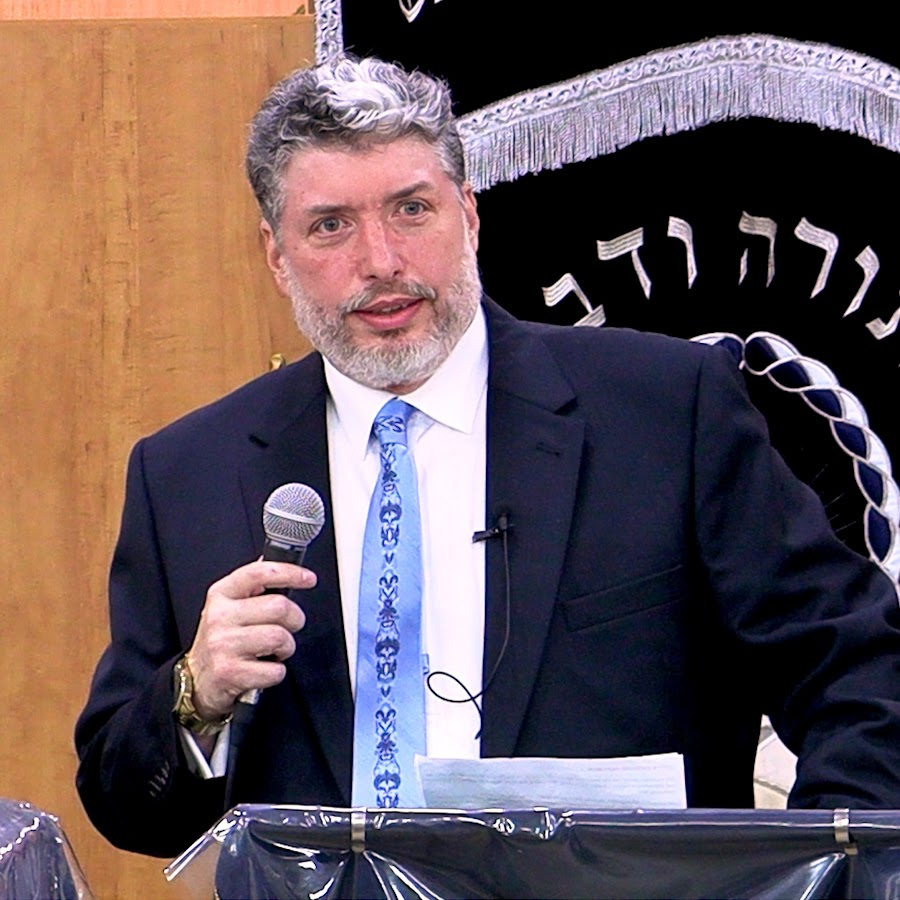
הגופה של ישו נעלמה! הרב טוביה סינגר מפרק את הטענה המשיחית-נוצרית
6,904 views
Help us combat aggressive Jewish evangelism in Israel: https://outreachjudaism.org/partners/ Let’s Get Biblical Study Guide (Volume 1 & 2) https://outreachjudaism.org/shop/lets-get-biblical-expanded-2-volume-study-guide/ https://outreachjudaism.org/ www.videvo.net https://www.freepik.com/ www.youtube.com/@RAK_EMET הרשמו לערוץ חדש נגד המיסיון Music: https://www.purple-planet.com http://www.toviasinger.tv/ #toviasinger #Judaism #Christianity #Messiah
Categories:Education
Comments
Transcript
Auto-generated transcript. Not time-synced to the video.
I was reading your piece on the
resurrection of Jesus. I also stumble
when it comes to this topic. It was such
an important event, his crucifixion.
Forget the New Testament narratives, all
anyone had to do to crush Christianity
was to produce the body. I admire your
ability to articulate ideas, not my
strength. General compassion is my
strength. Anyway, I cannot wrap my head
around the fact that the tomb was
guarded by Roman soldiers to shut up
early Christians. Just show the body.
That's the end of the statement.
>> The question is specifically were not
guards posted at the tomb thereby making
it impossible
for someone to sneak the body out.
Now, what the the basis of this question
is uh is is an M source. M source means
it's only found in Matthew and it's
Matthew chapter 27 verse 62. It's part
of Matthew's
passion narrative and what we find in
but it's really
silly. Now,
all right. So, the point is in Matthew
27, I'll just explain it is Jesus is we
are told in Matthew is crucified on
Friday as in all the gospels. Uh Jesus
crucified on Friday.
Now, what happens is the text says that
the following day the Jews, the priests,
Pharisees came and said that, you know,
the day after means Saturday and said to
the Romans, you know, what? They're
going to go and say that someone stole
the body from the tomb. We have to then
put soldiers in front of the tomb. So,
this way it can't be said that someone
stole the body. This is the next day.
This is not the day that it was not
Friday. This is Saturday. This is
according to Matthew. I'm not Please,
read it for yourself. Matthew 27 verse
60 61 62 63. This is how the whole thing
pans. And in fact, Pontius Pilate, the
governor of of the empire of this region
who ruled until 37. We are told
acquiesce to such a request.
The pilot says go ahead. Now, the reason
why this is
I don't believe any of this happened,
but this is a very very bad argument
because if in fact let's just play the
game what if.
If this is the case, when were the
guards put at the tomb? Now, I do not
subscribe to this. I don't believe none
of this happened. But, I'm going to just
play along with the story. If Pilate
the
placed Roman soldiers at the tomb on
Saturday,
what would prevent someone from stealing
the body Friday night? It actually
doesn't solve the problem.
This is so Matthew, meaning we don't
know who wrote the book of Matthew. We
don't know where it was written and I
don't care what your pastor tells you,
we don't know.
But, I will tell you this. Matthew was
the shlemazel
of the New Testament. Matthew in
repeatedly makes these kinds of errors,
really serious errors that make his
story so it's really it's almost as if
like God put in whoever wrote this
book's head so many errors that it
doesn't even it's hard to imagine that
no one ever corrected this. Like how
does it
They could have just stole the body.
Now, I again
don't start writing me in letters going
la la I don't believe any of this, but
the story doesn't help anything, okay?
Number two is the question what it asks
or if Jesus didn't resurrect from the
dead, why didn't they just produce the
empty the body? Now, what would have
settled it and Christianity would come
to a close. So,
do you there's a presupposition. It's a
it's a fallacy. You are presupposing
that they that they
that they uh,
that there was a body available to to
produce.
That means you're presupposing the
passion narrative that we find in all
the Gospels. You're presupposing that
this is what happened, that Jesus
crucified on Friday. Forget about all
the disagreements. I want to talk about
what they share in common. That Jesus
crucified on Friday
and then whatever he says on the cross,
there are seven endings. He's then
placed inside the tomb and then women,
whoever they are, discover him on Sunday
morning, okay? That's the key point. And
then they go and tell others that Jesus
rose in the synop- in Mat- in Mat- in in
most of the Gospels, they meet Jesus in
the Galilee. In Luke, they find him in
Jerusalem.
Great. You're presupposing that
something remotely like that occurred.
Well,
I don't believe that for 1 second. That
means that an incidentally
would the Christian Bible really record
Let's say they did produce a body. And
by the way, I don't believe this either.
Would Would the Christian Bible write
this? Would they report this? Of course
they wouldn't. The whole function of the
Testament is to convince you to believe
in Christianity.
How do you s- No, cuz I said it says in
John 20, "All this was written so that
you may believe." So of course, if
theoretically, again, I don't believe
this happened. And I'll tell you
I'm not saying what likely happened, but
something that's much more plausible.
But let's just play the game, what if?
If someone had the body, would the
writers of a book written 50 years after
the crucifixion, like Matthew, written,
let's say, 90, 85, whatever, 40, uh, 50
years later, would Matthew go, "And by
the way, they produced a body, but no
one No, of course they wouldn't write it
because he's a Christian. They don't
want to write anything that would So
what kind of they would write Well, they
wouldn't report that no more than the
than the Soviet Union would They
wouldn't even report when when there was
a nuclear accident in Chernobyl and it
took 3 days for the world to find out
because they thought it would be
embarrassing. Do you think the church
would ever report such a thing? Now, I
don't believe that part, okay? But I'm
just saying do you realize the amount of
Do you imagine how much Baileys you have
to drink to believe that? Okay.
If if No, I will do this with you
because I I I want to cause as little
friction as possible. So, I'm just going
to do it's not that I believe this,
okay? I don't. So, stop. But I'm not
saying I do don't. I'm just saying I'm
going to play what if.
The most logical story, I'm not saying
the most I discussed this in volume one,
but
simple explanation. The truth is that
nobody thought he rose from the dead. No
one thought such a thing. That means
that let's say he was crucified. I know
scholars say that this is axiomatic. I
I'm not going to argue that point, okay?
That Jesus was there was a man named
Jesus who was crucified. I just don't
want to argue. We don't have any
contemporary historians, so what? But it
is a consensus among New Testament
scholars, Christian or otherwise, that
Jesus was crucified. So, I'm going to go
with it, okay?
Well, the obvious answer is that there
was no
Jesus didn't appear to anybody and there
was no body, there was nothing to talk
about. This is incidentally why 1
Corinthians 15
the early That's very early. That's much
earlier than the gospels.
1 Corinthians 15 doesn't even know how
to describe what Jesus what was this
resurrected Jesus. He was not the Jesus
that was crucified that we would see in
John showing the wounds in the hands and
Peter eating fish. So, that means you
see that this is much later development.
The I'm not saying the most logical
um s- event that occurred. That is not
what I'm saying. What I'm saying I can
easily, the easiest construction without
getting into an argument, to avoid
problems, is saying,
"Let's just say this. Jesus is one of
200,000 Jews who were executed." Okay?
All right. What happens is that people
are disappointed. Eventually, 3 years
later, 5 years later, Mary Magdalene,
who's mentioned 12 times in the Passion
narrative, starts saying that Jesus
appeared to me. You're going, "How is
that possible?" We had a guy here in
Indonesia, his name is Peter the Great.
It's not his real name, who people are
saying appeared to him all over the
place. Sai Baba in in India,
people see him appear He has 30 million
followers. He's appearing to everybody
all over the place. Over pancakes in New
Delhi. The point is that at some later
stage,
somebody said, probably a woman, like
today, who says, "Mary met me."
Generally, it's not men, it's women.
Maybe that's why they're all women. I'm
just saying, just saying. So, what
happened? I mean, it The easiest The
simplest answer This is Occam's razor.
The simplest thing is eventually, the
idea that Jesus rose from the dead
became Somebody began to say it. Other
people doubted it, weren't sure. And
that's where you have the doubting stuff
in the Gospels, pushing back at that,
incidentally, which would make a lot of
sense. But, so therefore, the whole idea
that Jesus physically bodily rose from
the dead, which Paul says that he did
not. Paul says, "Of course there was a
resurrection." If you read 1 Corinthians
15, he doesn't say it was a human body
that rose. He says it was a spiritual
body. What does that mean? 8,000 New
Testament scholars argue what that
means. But, Paul is one thing for sure,
he's saying it was not the physical body
Jesus had when he was when he was
around. It's like a seed that dies in
the ground, and something completely
different comes out. We're not putting
the bodies. We see therefore that the
resurrection that Christians were
struggling with this, and
I am sure that this development that
Jesus rose from the dead physically
does in the way Christians now believe
it doesn't happen until 60, 70. Yeah,
once we get to Mark,
Mark doesn't even have a real
resurrection appearance because the last
12 verses are interpolated. And then by
the early 70, 80, 90, then this begins
to gel. Why does it gel? It gels because
early Christians are going, "What
exactly resurrected?" She asked me, "Why
didn't they preserve a body?" They
didn't preserve a body. They didn't even
know anybody died or anybody rose. They
didn't know anything. This is all a much
later development, but the problem is
that people who are either Christians or
grew up in the Christian world think,
and I mean this,
even if they even if they're
knowledgeable, they kind of think like
if the Jesus died, he's you know,
walking around, and the whole New
Testament sort of floated up down from
heaven.
The whole Christian Bible is much, much,
much, later, and this is a development
over time. And therefore, all these your
question is
pregnant with false presuppositions.
There was no body cuz no one's asking
for a body. This is all developed later.
And if someone today, by the way,
there's this guy Simcha Jacobovici. I'm
saying he's right or wrong, but there
are guys who are saying we found a tomb
of Jesus. I don't see any Evangelical
Christians running around going,
"Really, I want to see it." None of them
are interested. Why? If in fact this is
the case that Christians would have been
interested in seeing a body, how come no
Christian is even interested in seeing
what has been [music] found in Talpiot?
I'm not saying it's true, but why are
they even curious? And they're just
attacking [music] him. Again, I'm not
saying he's right, but it's very clear
Christians are not interested in looking
at a body, [music] even if someone says
they found it. Case closed.
>> [music]
[music]
>> Amen.