Preparing video...
0:00 / 0:00
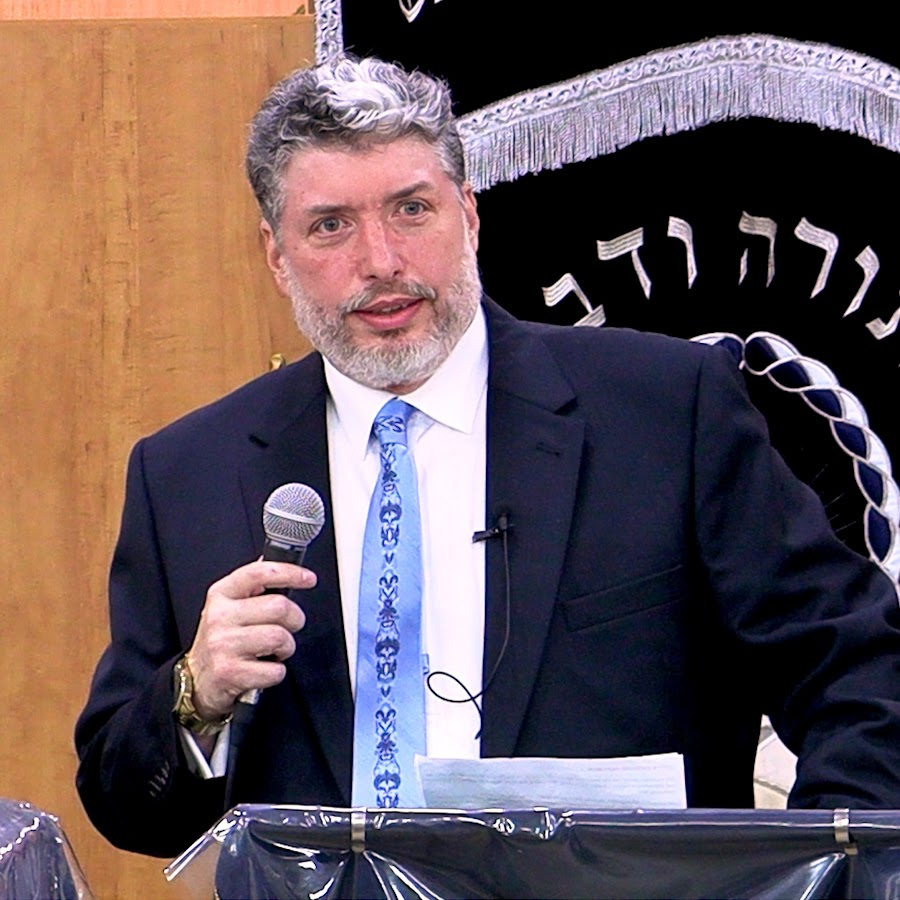
נוצרי לשעבר מתוודה בפני הרב סינגר: הרגזת אותי!
12,442 views
Help us combat aggressive Jewish evangelism in Israel: https://outreachjudaism.org/partners/ Let’s Get Biblical Study Guide (Volume 1 & 2) https://outreachjudaism.org/shop/lets-get-biblical-expanded-2-volume-study-guide/ https://outreachjudaism.org/ www.videvo.net https://www.freepik.com/ www.youtube.com/@RAK_EMET הרשמו לערוץ חדש נגד המיסיון Music: https://www.purple-planet.com http://www.toviasinger.tv/ #toviasinger #Judaism #Christianity #Messiah
Categories:Education
Comments
Transcript
Auto-generated transcript. Not time-synced to the video.
I remember watching you when I was a
teenage fundamentalist. Um, what was it?
Line of Fire? Lee Strobel was hosting
and you were going against the Trinity
and I was like, "Dude, this guy's
It was shocking they even allowed that
to air and I was blown away. So, so I
have some questions that I'd like to to
dive into with you specifically about
the New Testament. You've been doing um,
I would say anti-Christian apologetics
for quite some time or time with
Christian missionaries. You've been
listening to um, the apologist for many
years. So, you've been doing this for
some time. What are what's the single
biggest misunderstanding Christians have
about how Jews read their own scriptures
or read their own scriptures? Maybe read
as in how they read them, but also read.
>> Right. So, Jewish people view any
theological claim in light of the Hebrew
Bible. When I say Jewish people, I don't
mean the our friend from the senator
from Vermont. I I mean that Jewish
scholars are always assessing any claim
in light of the Hebrew Bible.
And the core tenants of the Christian
faith are not compatible with books like
Isaiah as an example. And I'm
speaking about chapters that are um,
that are unique, that are clearly
Messianic, that what comes into view is
a time when the chosen of Israel turn
back to the land of Israel, Jerusalem is
restored in our hands.
And then um, the there's a war, Ezekiel
38 and 39 with Persia. That has to
happen and then there'll be the
knowledge of God covers the world as a
water covers sea, a worldwide knowledge
of God, a universal peace on earth will
nation will not lift up sword against
nation, neither will they learn of war
anymore. Isaiah chapter 2 verse 3 and 4
is so important, so epic even the United
Nations had the brains to put it up on
uh across the street on 42nd Street and
1st Avenue. That That passage from Sinai
does not appear in the Christian Bible,
although everyone knows it's Messianic.
The in-gathering of the exiles, the
restoration of the Jews to their land.
Isaiah on. Ezekiel 37.
Uh the building of a temple, that's
critical on the Temple Mount in
Jerusalem once the Jews return. That's
Ezekiel the last three passages of
Ezekiel 37 and Ezekiel 41 through 47.
So, when we examine the 1st century, the
let's say the first 30 years of the 1st
century, we don't find any of this. In
fact, it's not that Jesus didn't do it
yet and he's going to do it. It's the
very opposite occurred, meaning there
wasn't a world peace in the 1st century.
On the contrary, there was war and it
was during the golden age of the Roman
Empire and the Jews went to war with
Rome. It didn't turn out very well. Um
there wasn't a temple built during the
1st century, but rather one that was
destroyed in the culmination of the
great war that uh ended in on the 9th
day of the 5th month in the year 70.
Uh there wasn't a universal knowledge of
God during the 1st century. Quite the
contrary, because of the wars with the
empire
and the uh the undoing not just a
building of a temple, but the entire
Jewish commonwealth in Jerusalem was
shattered. The knowledge of God and the
commitment to observance
uh
uh uh was dramatically weakened. There
wasn't a resurrection of the dead. Well,
that's pretty clear in Tanakh. In fact,
many Jews, tens of thousands, died in
those wars with Rome. So, if you wanted
to know what the Messiah's supposed to
do,
um wouldn't you look at the first third
of the 1st century and just invert it?
It's the polar opposite. It It's um It's
it's you could it's the reciprocal of
it. So, this is not like a complicated
issue. Now, it is true that if you and I
wanted to start a religion and we didn't
accomplish anything, you would have to
somehow come up with the idea of a
second coming. You would have to All the
religions do that. There's got to be a
second coming.
The Of course, that's not compatible
with Tanakh and moreover, it suffers
from the fallacy of unfalsifiability.
It it it can't be tested in any way.
Anybody could be the Messiah. And then,
if we can use that kind of If there is
that kind of elasticity, why do
fundamentalist Christians then reject
the
the Church of Jesus Christ of Latter-day
Saints, the Mormons? They Protestants
reject the Roman Catholic Church. Their
chief argument is that these people
didn't do what they're supposed to do
with the papacy there. But, Catholics
have their personal Messiahs going to
happen. So, they're using a rigorous
methodology to to reject Islam and other
religions, but they won't apply it to
themselves. So, that's the real problem.
The The core principles of the Christian
religion are not compatible with Tanakh,
full stop.
>> Mhm.
You know, I I recently was I I did a
post of some sort on why I'm not a
Christian and like there's an immediate
reaction happening right now
where if you are critical of
Christianity,
you're accused of being a Jew.
For simply not believing in Christianity
and critiquing it. You're not allowed to
actively critique it or else you're
Jewish. Um clearly, they hate Jews,
right? And this has got a long history
that goes back to God killers and and uh
I mean, you see it in the book of Acts.
And what I found interesting in our
dialogue in the past is how you brought
up Matthew in a way I never saw it.
Because most scholars I talked to see
the Gospel of Matthew as the most Jewish
gospel that Matthew is like
pro-Judaism and pro-law-abiding and such
and you're looking at it going, I see
huge red flags here, the way that they
portray Jews. So, can you tell us some
of the reasons why Jews do not accept
Jesus or that he's the Messiah and that
Christianity is the religion they should
follow?
>> Right. So, two parts there. Matthew, in
my view, is
with the John is the most anti-Jewish of
the Gospels.
The reason why they think that Matthew's
Matthew's pro-law-abiding is a good
reason. That's the Sermon on the Mount,
Matthew 5.
The sheep and the goats. There's reason
to think that, but that should not be
conflated with how Matthew portrays the
Jews at every turn. Both when Jesus is
born in the infancy narrative, it's the
Jews and the king of the Jews that are
trying to kill the baby Jesus and it's
these non-Jews from the East that are
worshipping him. That's a setup. And
look at Matthew 27, the Jews are saying,
crucify him and Pontius Pilate and his
wife are going, he's innocent. His wife
makes a cameo, the only cameo in the New
Testament, and the Jews then proclaim
verse 25, we take his blood upon
ourselves and our children forever.
There's
There's no even parallel to to that.
People are confusing that with the point
that Matthew's quoting the Hebrew Bible
more frequently than the other Gospels,
which he does, and Matthew is saying
that Jesus is pro-law-abiding, which he
does, but has nothing to do with the
culpability of the Jewish people. But
going back to Jesus being the Messiah,
look, we have Let me just make it really
easy.
Yeah. Ezekiel Ezekiel 37, Valley of Dry
Bones. Like, can there be a more simple
chapter than that? Well, we have there
everything that's supposed to happen in
the Messiah. You could read it with no
commentary, just go It's 28 verses.
Ezekiel is very generous in providing
saturated information what he means. The
The value dry bones of the restoration
of Israel, restoration of the Jews to
their land, the in-gathering of the
exiles. Incidentally, half the Jews live
in Israel today, half the known Jews
live in Israel, and Jerusalem has been
restored. Ezekiel 24 and 25, the Messiah
is explicitly there, and the Jews are
keeping all the commands. And 26, 27,
28, the temple is built, there's world
peace, and there's um a gathering in.
It's a covenant of peace. So, that's all
you would have to do. That means all I'm
asking the viewers to is to let Ezekiel
speak for itself, not through Augustine
or Chrysostom, not through the photos of
the church fathers. Just let it read for
itself. You don't need a commentary, I
assure you this. And you don't need to
read Hebrew. Pick your translation. It's
so It's so easy to see what's supposed
to happen, realize that there's nothing
going on in a church service, a highly
liturgical church service, or one that's
not well structured, the Assemblies of
God, that has anything to do what what
we would encounter in Isaiah 11 or
Isaiah 37. We're not anti-Christian,
we're just very pro-Tanakh,
and therefore any idea that's not
compatible with it is rejected, much in
the way
Christians reject the claims of of
Mormonism because it's not compatible.
Same thing, same deal.
>> If you enjoyed this program, please like
and subscribe.
>> [music]
[music]
[singing]