Preparing video...
0:00 / 0:00
למה הנצרות המציאה את לידת הבתולין של ישו? הרב טוביה סינגר
246 views
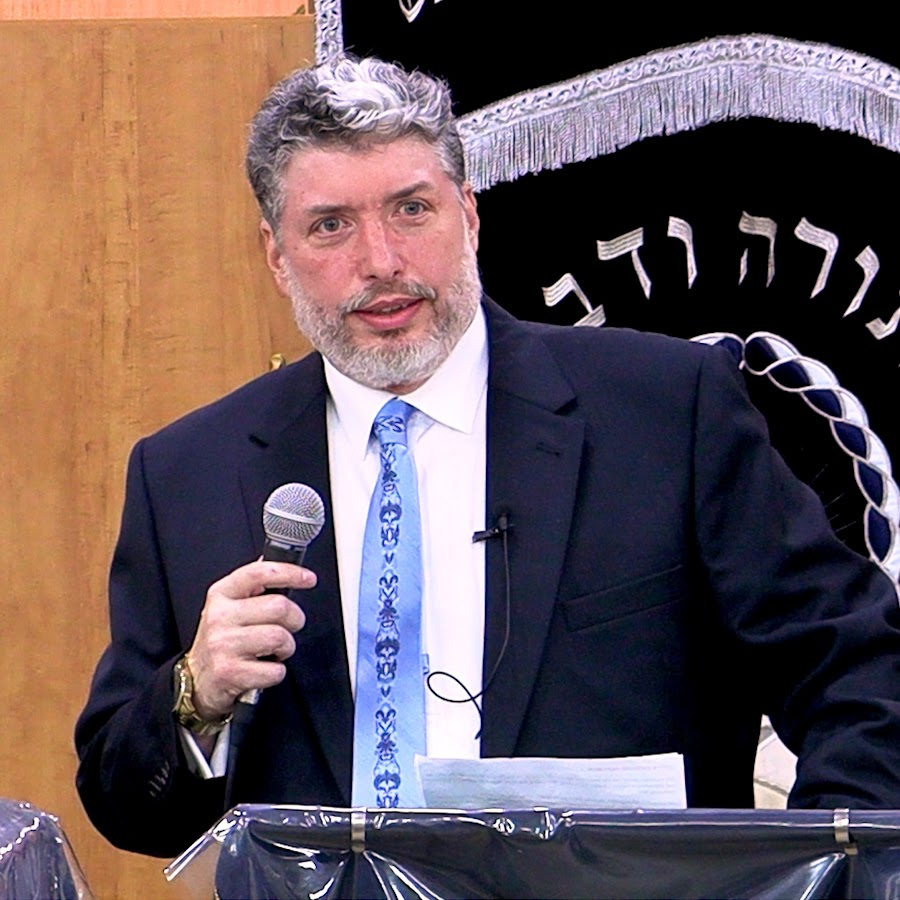
Help us combat aggressive Jewish evangelism in Israel: https://outreachjudaism.org/partners/ Let’s Get Biblical Study Guide (Volume 1 & 2) https://outreachjudaism.org/shop/lets-get-biblical-expanded-2-volume-study-guide/ https://outreachjudaism.org/ www.videvo.net https://www.freepik.com/ www.youtube.com/@RAK_EMET הרשמו לערוץ חדש נגד המיסיון Music: https://www.purple-planet.com http://www.toviasinger.tv/ #toviasinger #Judaism #Christianity #Messiah
Comments
Transcript
Auto-generated transcript. Not time-synced to the video.
Uh, speaking about Jesus, Yeshua, what
does the Tanakh says regarding lineage,
the genealogy of Jesus? How does this
question
fit with the virgin birth of Jesus?
>> It's a problem because the way you know
what tribe you're from is through your
father. See Numbers chapter 1 verse 18
as an example. Your father determines
what tribe you're from in Hebrew the
mishpacha is some levees of those them.
The problem is that the very two books
in the Christian Bible that contain the
supposed genealogy of Jesus claim that
Jesus was supernaturally conceived
without a father. It's very striking
Matthew and Luke. And therefore, what we
are actually given in the Christian
Bible in Luke 3 and Matthew chapter 1
are not the genealogy of Jesus but the
genealogy of Joseph.
When the church adopts the notion that
Jesus was born of a virgin. So, you
don't find that in Paul's letters. You
don't find that in the earliest gospel,
Mark. I mean chronologically.
The moment the church claims that Jesus
was born to a virgin, what it did was it
sabotaged the claim that he can be the
Messiah because he's born to a virgin,
you don't have a human Jewish father
with which to trace your genealogy
back to King David. So, it it blows the
whole thing up.
>> I understand.
Thank you for this explanation. Very
helpful.
I would like to ask you now regarding
the aspect of sacrifice for the
remission of sins. For us as Christians,
Jesus is the lamb who on the cross paid
for us, taking the place of the animals
that people of Israel used to sacrifice
to God. For us, one of the most
important verses about this is Hebrew
9:22
where we read that without the shedding
of blood there is no forgiveness of
sins. How can you tell me about this
matter?
>> So,
that should raise an alarm
if the verse that a Christian can point
to is Hebrews 9:22.
It says without the shedding of blood
there's no atonement. Now, just the
context of Hebrews 9:22, Hebrews is
saying that everything went on in the
Old Testament is a foreshadowing of
Jesus of Christ.
>> [snorts]
>> But this verse doesn't exist and in
fact, take the book of Jonah as an
example, a book
I know that you're very familiar with.
It's a story about a nation that was
wicked, a city Nineveh, the capital of
the Assyrian Empire.
Jonah came to them and they repented and
God forgave them. No blood, no
sacrifice.
So, as it turns out, um sacrifice atoned
for unintentional sins and Hebrews is
misquoting Leviticus 17:11.
The vast majority of sins are atoned not
by sacrifice, but by repenting, by
giving charity. There was a sacrificial
system, we miss it, it will return
and that's for unintentional sins.
You'll never learn this in church, but
you will find it in Leviticus chapter 4.
So, therefore, Hebrews 9:22 is not uh
quoted in the Hebrew Bible. Although
your footnotes will tell you it's
Leviticus 17:11. But Leviticus 17:11 is
explained to why you're not allowed to
eat blood. It's cuz blood is reserved
for making an atonement for your soul.
Uh but Hebrews doesn't quote it that
way. Number two, human sacrifices are
always forbidden.
I don't know much about the Italian
criminal justice system, but I do know
this.
I believe that that Italians hope that
every person sitting in an Italian
prison is guilty.
And if you were to believe that there
was a single person who was innocent in
an Italian prison, it would break your
heart.
>> Of course.
>> So, of course. This is
we we all have that we we want the
wicked punished and we want the innocent
exonerated. I am sure you live in a
civilized country.
So, if you have that sense of justice
doesn't God have the sense of justice
not to punish an innocent person for the
bad behavior
of the guilty? Moreover, the Bible says
that the innocent can suffer for the
sins of the wicked. Ezekiel chapter 18
verse 21 through 23. I mean, if you
would never want to think. I mean, if a
person could be punished for the
for the sins of the guilty well, God at
least has as much mercy as you do. So,
this whole notion is completely
antithetical to is in incompatible with
the with the criminal justice system in
the Hebrew Bible. Innocent people should
be exonerated and no innocent person can
die for the sins of the wicked.
>> I understand. It's very interesting.